
DingTalk (钉钉) is Alibaba Group’s workplace platform, launched in 2015. It combines messaging, video meetings, documents, approvals and attendance in one app, and an open platform lets companies plug in their own business systems. Chinese companies, schools and public bodies use it to run daily operations; foreign companies meet it through local teams and partners.
What DingTalk does
DingTalk started as a messaging tool and grew into a platform that covers how an organization is structured, how it works together and how its systems connect.
Organization and directory
The company directory holds the organization chart: employees are imported in bulk, roles and permissions are set by department or project team, and an employee who leaves is removed from every group at once. Customer contacts can be managed by the company rather than by individual employees, so they stay with the business when someone leaves.
Communication
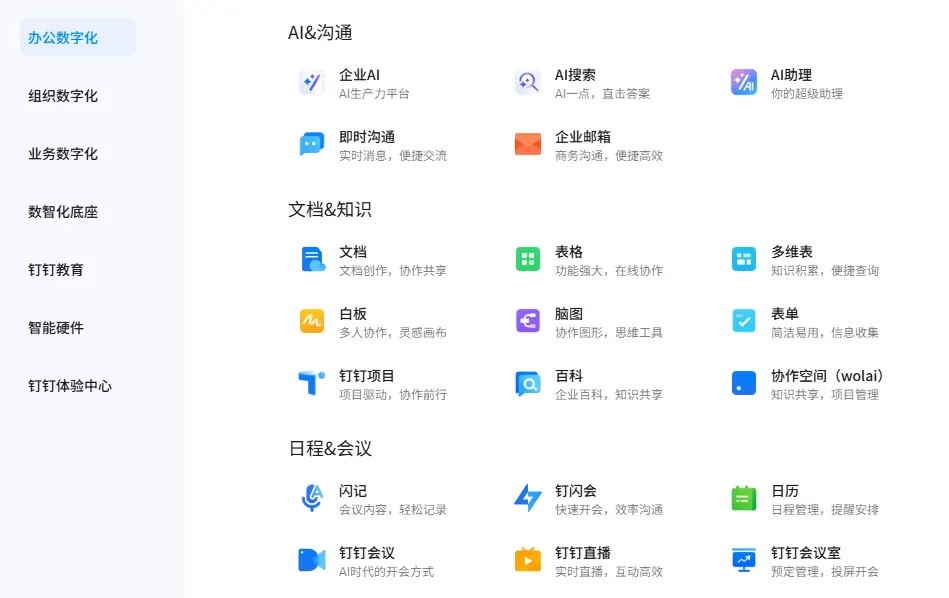
- Messaging: text, voice and video, with read and unread status visible in group chats.
- DING messages: an important message can be pushed to the recipient by in-app notification, text message or phone call, so it is not missed.
- Secret chat: encrypted conversations whose messages disappear after reading, with names and avatars blurred.
- Meetings: video meetings with screen sharing and recording, useful for teams spread across cities or countries.
Office automation
- Approvals: customizable templates for leave requests, expense claims or purchases, with progress visible to the requester.
- Reports and logs: standard daily or weekly report formats that managers read in one place.
- Attendance: check-in by GPS location, Wi-Fi network or QR code, with automatic attendance reports for payroll.
- Tasks and projects: task boards and Teambition project management, from planning to delivery.
- Cloud drive: shared folders with permissions and synchronization across devices.
Who uses DingTalk
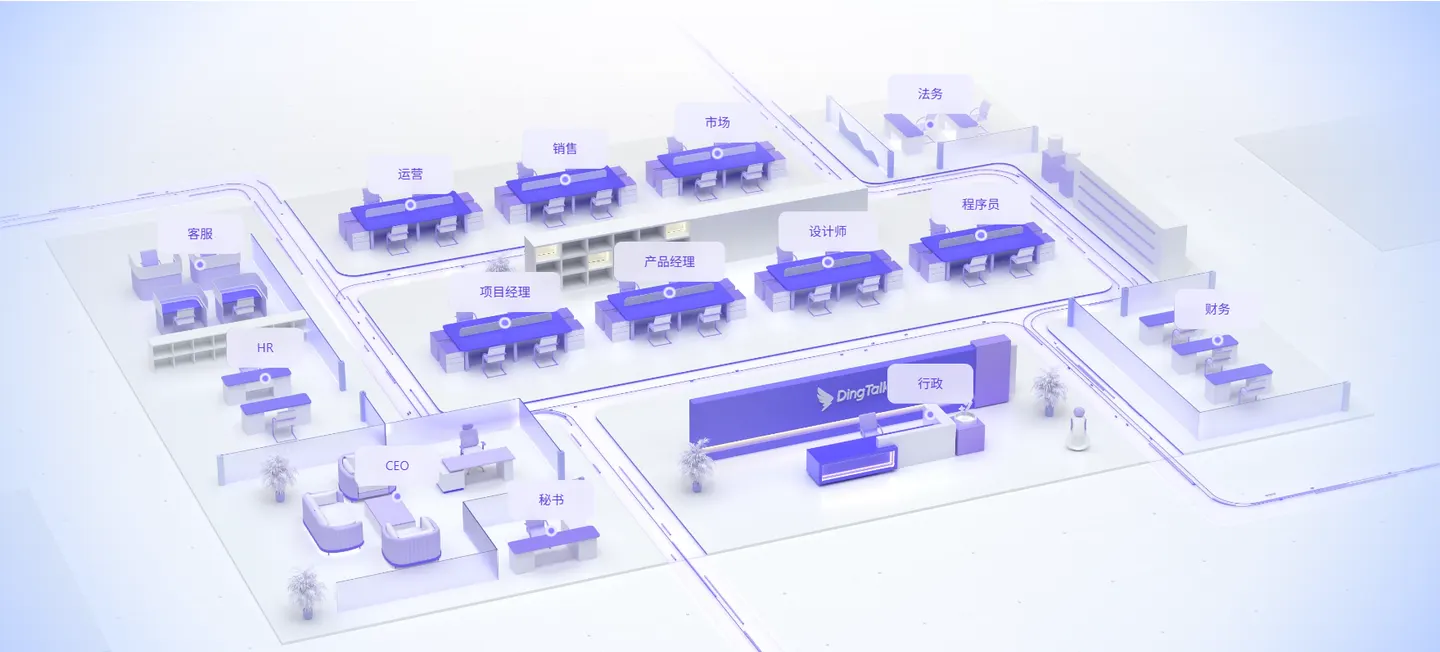
DingTalk is aimed at organizations of every type in China: private companies, factories and retail chains, but also schools and public bodies, which use its attendance, approval and education features. Its management features (attendance, approvals, reports) suit companies with large frontline or field teams.
What a foreign company can do with DingTalk
DingTalk has an English-language website and app, so a foreign team can use it alongside Chinese colleagues. For a foreign company, three uses come up most often:
- Working with a Chinese subsidiary or partner that already runs on DingTalk, by joining its organization or creating your own.
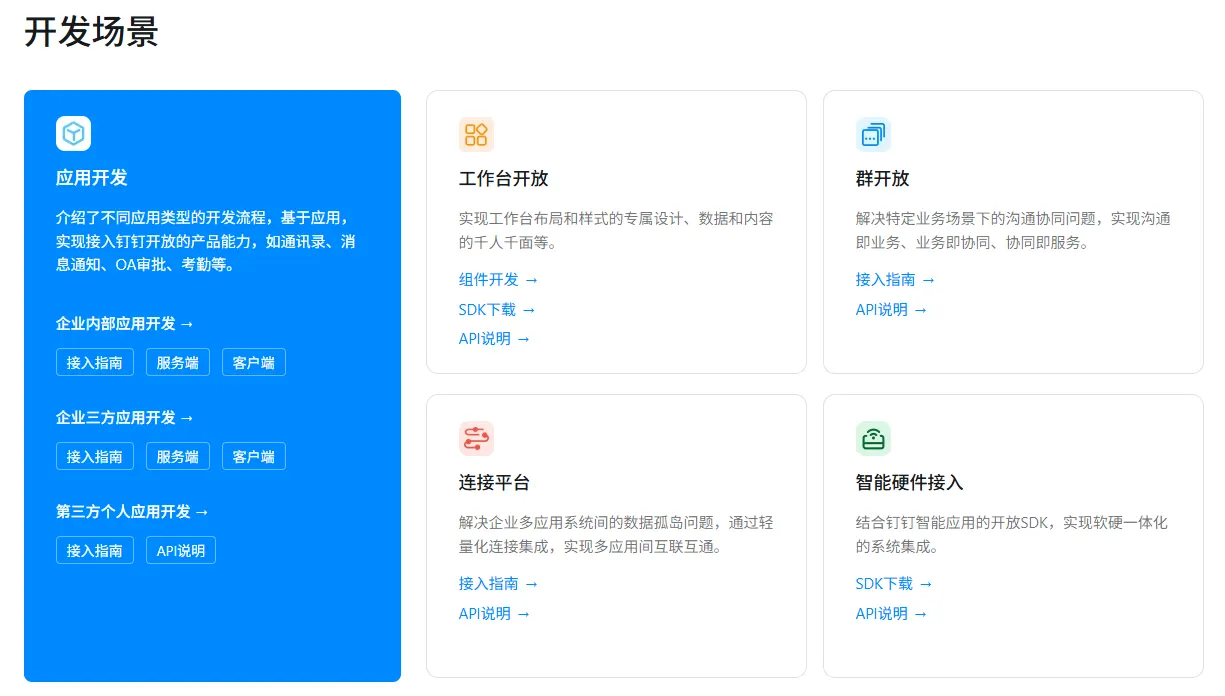
- Connecting DingTalk to your business systems. The DingTalk open platform provides APIs for the directory, messages, approvals and attendance, so DingTalk can exchange data with an ERP, a CRM or an HR system, with single sign-on.
- Building internal apps inside DingTalk, either as company-only apps or as third-party apps for other organizations, with low-code tools for simple workflows.
Integration work is where most of the value sits: attendance and approval data from DingTalk can feed reporting dashboards, and sales activity can flow into a CRM. QPSoftware designs these CRM and business intelligence solutions for companies operating in China; our article on choosing a CRM in China explains the trade-offs between existing tools and a custom build.
How DingTalk differs from WeCom and Feishu
- WeCom, from Tencent, is linked to WeChat: employees can talk to customers on WeChat from their work account. DingTalk is centered on internal management and has no equivalent link with WeChat.
- Feishu, from ByteDance, puts documents, multidimensional tables and collaboration first, and is popular with technology and creative teams.
- For video calls alone, many companies use Tencent Meeting alongside any of the three.
DingTalk is also part of the Alibaba ecosystem, alongside Alibaba Cloud and Teambition.
How QPSoftware can help
If your team in China runs on DingTalk, we can connect it to the systems you already use: CRM, ERP, reporting. As a CRM and BI agency in China, our Shanghai team builds the integrations and dashboards that turn DingTalk data into decisions.
Frequently Asked Questions
Can a foreign company use DingTalk?
Yes. Anyone can download DingTalk and join or create an organization, and the website and app have English versions. Some features, such as organization certification and certain paid plans, may ask for Chinese company documents, so check the requirements with DingTalk or your Chinese subsidiary before you plan a company-wide rollout.
Is DingTalk available in English?
Yes. DingTalk has an English website and an English interface in its app, which a foreign team can use alongside Chinese colleagues working in Chinese. The developer documentation of the open platform and many third-party apps are mainly in Chinese, which matters if you plan integrations or internal apps.
How does DingTalk differ from WeCom?
Both cover chat, meetings, documents, approvals and attendance. WeCom, from Tencent, connects to WeChat, so employees can talk to customers on WeChat from their work account. DingTalk, from Alibaba, focuses on internal management and workflows, with strong attendance, approval and reporting tools. Companies centered on customer relationships often choose WeCom; companies centered on operations often choose DingTalk.