E-learning Development Agency in Shanghai, China
QPSoftware is an e-learning development agency in Shanghai. We design and build learning platforms for companies and education providers in China and abroad: new interactive and performance-driven features on the WordPress and LearnDash platform of MOTIF, and a custom game-based platform for the STEAM coding courses of TechTrek. Founded in 2009, our international team has delivered more than 200 projects.
E-learning is the use of computer and internet technologies to help people learn and perform better. A good platform keeps learners engaged and measures their progress.
What our e-learning development agency builds
Each project starts from your learners and your business model, then combines what they need:
- Learning management systems (LMS). Platforms on WordPress and LearnDash, as for MOTIF and TechTrek, or another LMS when the project calls for it, with course management and course purchase.
- Courses to e-learning standards. Modules to the SCORM and xAPI (Tin Can) standards, authored with tools such as Articulate or Adobe Captivate, and a learning record store (LRS) to host and track them.
- Interactive and gamified learning. Notifications, course invitations, interactive training elements, rewards and progress levels that keep learners motivated.
- Learning analytics. Dashboards that track course completion and show where learners drop off, and that can feed your CRM or BI tools through our CRM and business intelligence solutions.
- Instructional design and multimedia. Storyboarding, video, audio and graphics, accessible modules with captioning and audio description, and the configuration and loading of courses into the LMS.
Before you start an e-learning business: choose your model
An e-learning platform costs more to build than classroom material, and less to deliver over time: web servers and technical support cost far less than facilities and teaching hours. It reaches learners who are far away, short of time or poorly served by classroom training, and it records data on their progress.
The first decision is the model, because the two options lead to different platforms and business models:
- Self-paced e-learning. Learners follow the courses on their own, on the platform.
- Instructor-led e-learning. A teacher runs the course and brings several curriculum contents together.
In both cases, course quality rests on learner-centered content, granularity, engaging content, interactivity and personalization, and on activities that meet quality standards. Our guide on how to develop an interactive e-learning solution compares the types of platforms and the criteria for choosing an LMS.
How we develop your e-learning platform
We have followed these steps with e-learning companies in China and abroad. Projects run in an agile way, as described in our project methodology.
Concept and research
- Define the concept in a User Centered Design Canvas (UCDC) meeting.
- Benchmark the competing products.
- Run workshops with you: define the minimum viable product (MVP) by ranking features with the Kano model (basic, performance and excitement attributes), write the use case scenarios, and sketch the front end and back office on paper for every user, from students to teachers and administrators.
- Build a digital prototype and test it with you and a panel of students, before any code is written.
- Update the user experience (UX) from the test feedback.
For deeper user research, see our UX research and Core Model workshops.
Design and technical specifications
- Design the information architecture, the wireframes and the user interface (UI) of every screen, front end and back office.
- Select the technical solution: the LMS, the authoring tools and the standards, such as SCORM and xAPI.
- Write the technical specifications for the developers.
Development
The front end and back end are coded on an extensible and scalable solution, with scheduled demos of the product.
Testing and launch
- Full testing.
- Training for your team, and a user guide.
- Launch in production.
Trial and official launch
The platform first opens to a limited number of users, with one month of maintenance and debugging. It then launches officially, and its promotion starts: for MOTIF, a second phase brought SEO, inbound marketing and funnel optimization.
E-learning for learners in China
A platform for learners in mainland China is planned for China from the start:
- Hosting and ICP filing. Serving the platform from servers in mainland China requires an ICP filing first. Hosting outside the mainland avoids the filing, but the pages must then be tested from China. We make your website work in China, from the filing to the hosting.
- Approval for education services. China’s Measures for the Administration of Internet Information Services (article 5) list education among the internet information services that may need the approval of the competent authority before the ICP filing or license.
- Learner data. The Personal Information Protection Law treats the personal information of children under 14 as sensitive and requires the consent of their parents or guardians, which matters for courses aimed at young learners.
- Videos and third-party tools. Videos, plugins and fonts must load in China: we work with video platforms available there, such as Polyv.
To size the opportunity, read our articles on the e-learning market in China and on STEAM education in China.
Our e-learning work: MOTIF and TechTrek
MOTIF, created by Alvanon in 2018, offers online courses by apparel experts. Starting in November 2018, we extended its in-house platform, built on WordPress and LearnDash: a better course purchase experience, course management, notifications, course invitations, interactive training elements and a learning analytics dashboard with course completion tracking. A second phase added SEO, inbound marketing and funnel optimization. Over the 12 months measured, the average time spent on course pages rose by 32.65%, organic visits grew by 2,000% in a year and online sales by 600% year over year.
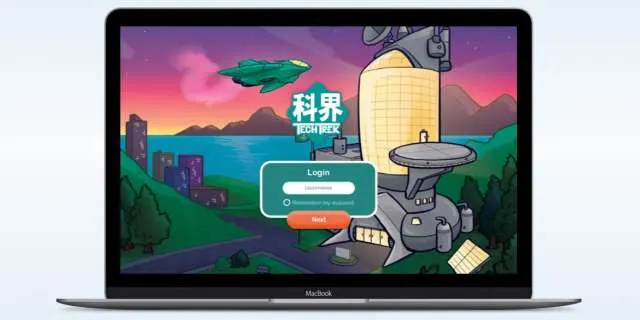
TechTrek develops skills-focused tech courses for young learners and was taking its offer online for the first time. We started with user research and a competitor audit, including a heuristic evaluation based on 27 customized heuristics, then designed and developed a game-based learning platform for its STEAM coding missions. Our article on gamification techniques for e-learning goes further on game mechanics in online courses.
Frequently Asked Questions
How much does it cost to develop an e-learning platform?
It depends on the scope. Configuring an existing LMS costs less than building custom features, and each user role, integration and interactive or gamified module adds work. Course standards such as SCORM and xAPI, video hosting, and a launch in mainland China with its ICP filing also weigh on the budget. Defining the MVP first keeps the spending on the features your learners need.
How long does it take to build an e-learning platform?
The timeline depends on the size of the MVP, the rounds of prototype testing with learners, the readiness of the course content, the integrations and the approvals needed in China. Our process ends with a trial on a limited group of users, with one month of maintenance and debugging, before the official launch. The schedule is set once the research phase has fixed the scope.
Do you develop SCORM and xAPI courses?
Yes. Our team designs and develops e-learning modules to the SCORM and xAPI standards, with authoring tools such as Articulate, and configures and loads the courses into the LMS. Tracking data can feed a learning record store (LRS) or learning analytics dashboards, like the one we built for MOTIF to follow course completion.
Can an e-learning platform work for learners in mainland China?
Yes, when it is planned for China from the start. Hosting in mainland China requires an ICP filing, and education services may also need the approval of the competent authority. Videos, plugins and fonts must load in China, so we use services available there, such as the Polyv video platform. Learner data falls under China's Personal Information Protection Law.
WHY QPSOFTWARE?
Founded in 2009, QPSoftware is a digital agency in Shanghai with an international team of more than 20 people. Our e-learning projects bring user research, gamification design and LMS development together in one team, for learners in China as well as abroad. Our Scrum Alliance Certified ScrumMaster keeps projects on track, and we support you from your first requirements to the launch and promotion of your platform.