QPSOFTWARE

Chinese App Developers and Mobile App Agency in Shanghai

Top Mobile App Agency in Shanghai

QPSoftware is a top Mobile app agency located in Shanghai offering app design, app development and app testing.

QPSoftware is a digital agency in Shanghai whose Chinese app developers design, build and test iOS and Android apps for companies that target users in China and abroad. Since 2009, we have delivered more than 200 projects, including the earthquake monitoring apps of Mageba, the loyalty app of Montagut and an audit of The Economist’s Chinese app.

Our mobile app UI/UX design, iOS and Android app development and app testing services in China can cover a whole project or a single step, like the audit we ran for The Economist.

What our Chinese app developers build

  • Native and cross-platform apps for iOS and Android, with the back end, the APIs and the web interfaces that run them.
  • Features that fit Chinese users, such as login and sharing with WeChat, QQ and Weibo, or WeChat Pay and Alipay integration.
  • Apps connected to your systems, from business intelligence dashboards to equipment in the field.
  • WeChat Mini Programs, when your users are already in WeChat: a mini program opens inside WeChat, without a download from an app store. See our WeChat Mini Program development.
  • Audits of existing apps, on Chinese devices and networks.

Apps we have built

  • Mageba, earthquake monitoring. For this Swiss supplier of seismic protection devices and structural monitoring systems, we built a web app and a mobile app for its ROBO®QUAKE monitoring tool. The mobile app shows real-time and historic dashboards based on Microsoft Power BI, sends event alerts by SMS and email, and connects to equipment over Bluetooth for on-site checks.
  • Montagut, loyalty program. For the French clothing brand, we developed an iOS and Android loyalty app with a store locator, purchase history, reward points and up to 20 badges earned through a gamification system. Read how we built Montagut’s mobile loyalty program.
  • FamilyPlug, healthcare. We designed and developed a native iOS and Android app that plays audio messages, videos and pictures from families to unconscious patients, at hours chosen in advance.
  • The Economist, app audit. In one week, we audited The Economist’s Chinese app: its speed, its adaptation to local networks and the features that would integrate it into the Chinese ecosystem, such as WeChat. The Economist then extended the project with a monthly audit.

How to launch an app in China

Publishing an app for users in mainland China takes four steps on top of development.

  1. File the app before launch. Under a July 2023 notice of the Ministry of Industry and Information Technology (MIIT), an app that provides internet information services in mainland China must be filed before it operates. The filing goes to the communications administration of the province where the operator is based, through its network access provider or the app store that distributes it. App stores may not distribute an app without a filing, and the app must show its filing number in a visible place. As our guide to ICP filing for websites and apps explains, a foreign company needs a local entity, such as a WFOE, to file its app.
  2. Prepare the App Store listing. App Store Connect asks for the ICP Filing Number of apps that must be available in China mainland, and the app details should match the MIIT filing.
  3. Publish on the Android stores. Android apps reach Chinese users through several local stores. In a 2021 notice on apps that infringe user rights, MIIT named the stores of Tencent (MyApp), Xiaomi, OPPO, Huawei and vivo for problems such as lax review of the apps they list, and required them to correct these problems. Each store has its own submission, so the release is prepared store by store.
  4. Localize the app. Chinese users expect the interface in Simplified Chinese and local services, such as WeChat login.

How we work on your app

We run app projects with an agile methodology based on Scrum, with a certified Scrum Master.

  1. Scoping. Goals, users, features and platforms, and the choice between a native app, a cross-platform app and a mini program.
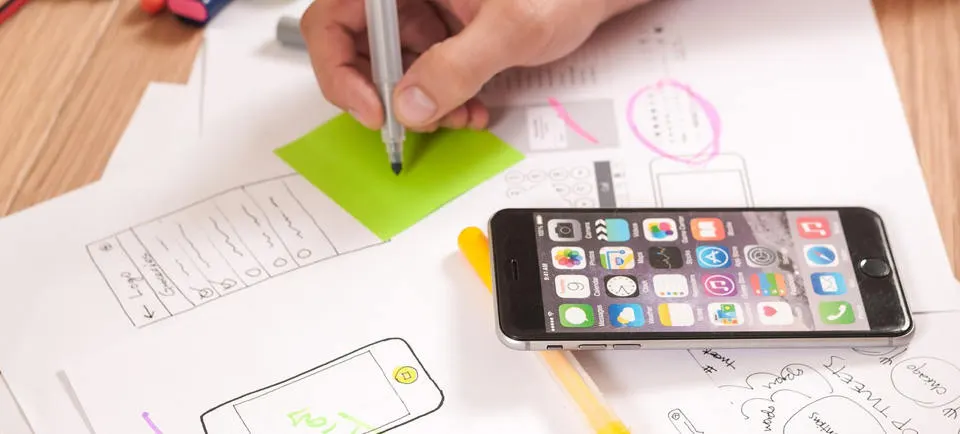
  2. Design. Wireframes, interface design and a prototype tested with users.
  3. Development in sprints. Each sprint ends with a usable version that you can review.
  4. Testing. Functional and regression tests on real iOS and Android devices, Chinese brands included.
  5. Release and updates. Filing and store submissions, then new versions. We helped Montagut develop the next version of its loyalty app.

Further reading

App Design

App Design

User friendly and conversion-oriented UI and UX app designs that will increase your brand awareness, enhance your productivity and reach millions of users in the Chinese and international markets.

Learn more about App Design →
App Development

App Development

High-end mobile apps that have the user in mind. We develop your app solution for iOS, Android and the Chinese market with the latest cutting-edge technology and with data-analytics to guarantee continuous performance improvement of your product.

Learn more about App Development →
App Testing

App Testing

Multi-device app testing with the greatest attention to detail provides your users with an exceptional digital experience. Our skilled app experts can perform testing for the international and Chinese markets.

Learn more about App Testing →

Frequently Asked Questions

How do you launch an app in China?

Plan four steps. File the app with the Chinese authorities before launch, through a network access provider or an app store, as MIIT has required since 2023. Add the ICP Filing Number to your App Store listing. Submit the Android version to the local app stores one by one. Localize the app in Simplified Chinese, with local services such as WeChat login.

Can a foreign company publish an app in mainland China?

Yes, with a local structure. The app filing is made with the communications administration of the province where the operator is based, so a foreign company needs a local entity, such as a WFOE or a joint venture, to file its app. We help you check these requirements before development starts, so that they do not delay the launch.

Should we build a native app, a cross-platform app or a WeChat Mini Program?

It depends on your users and your features. A native app is written for each platform and gives the best performance and device access. A cross-platform app, for example in React Native, shares one code base for iOS and Android and usually costs less. A WeChat Mini Program runs inside WeChat, with no download from an app store.

What affects the cost and timeline of an app?

The main factors are the platforms, the number of screens and features, the integrations with your systems or with services such as WeChat and payments, the design work and the testing scope. A cross-platform app usually takes less time than two native apps. We estimate the budget and timeline once the scope is defined, and you review a usable version at the end of each sprint.

Do you maintain and update apps after launch?

Yes. Apps need updates after release, for new features and for changes in iOS, Android and store rules. We helped Montagut develop the next version of its loyalty app, and The Economist extended our audit of its Chinese app into a monthly service. Tests are run again on each new version to catch regressions.