
How to Do User Research to Achieve Greater UX
Updated on |By QPSoftware
Knowing how to do user research comes down to three phases: set a clear objective, collect data with several methods such as surveys, A/B tests, click tests and heatmaps, then analyze the results with everyone on the project. Done before design starts, it shows what your users really need, so your UX rests on facts, not guesses.
Key takeaways
- User research studies your users’ behaviors, needs and motivations. It comes before UX design.
- Market research measures a market; user research studies individual users, their habits and their problems.
- Useful methods include the core model, A/B testing and click testing, supported by tools such as a User Centered Design Canvas, heatmaps and online surveys.
- Effective user research runs in three phases: preparing, collecting and analyzing.
- Do it early, before design and development, to avoid fixing the project along the way.
You may have often heard the expressions “user research” and “user experience”. The two terms are sometimes confused, and it can be hard to tell what each one means and what role it plays in web design.
User research (UR) and user experience (UX) are two essential elements of designing a digital product. Used correctly, they prevent embarrassing situations like, metaphorically speaking, preparing a delicious meat menu only to discover that your guests are vegetarians.
The same thing can happen when you create a website. The final product can be excellent, but not at all what your visitors are looking for.

This is when user research comes to your rescue. Let’s look at the differences between user research and user experience, how they complement each other, and how to apply them effectively to your project.
What Is User Research?
User research is an analysis process aimed at understanding your customers’ behaviors, needs and motivations.
It provides information that is vital to decide which products or services to present to your audience, and how. It involves direct contact with potential customers to understand their habits, their interests, the problems they face and the solutions they are looking for. For an existing website or digital product, user research shows how users interact with it and what they are looking for when they reach your web pages or your mobile app.

User research is the step that precedes user experience (UX) design. The goal of UX is to create a pleasant experience by giving users the information or solutions they are looking for in the easiest possible way. Creating an efficient UX without quality user research first is extremely challenging.
Market Research vs. User Research
User research should not be confused with market research. Market research focuses on general aspects, while user research aims to know the customer individually, with details specific to them.
For example, market research establishes the size of a market, the real demand for a product or service, demographic information about possible customers, and so on.
In short, market research focuses on the quantitative side of a market, whereas user research focuses on the qualitative side. Market research helps determine the feasibility of a project; user research uncovers the real needs of customers, so you can offer the product they want.
Why Is User Research Important for Your Business?
User research is crucial to the success of your business. It stops you from guessing what your audience wants, and guesses can easily turn out to be wrong. If that happens, your business suffers.
With effective user research, you know what your customers want. Once you have established what your audience is interested in, or identified a specific problem they want to solve, it is easier to create an offer that hits the target.
With this information, the web designer can optimize the UX for your specific audience.
User Research Methods for Websites
Effective user research combines several methods to collect the necessary information. Below are some of the most effective ones, which our UX research agency in Shanghai also uses as part of QPSoftware’s project methodology.
Core Business Model
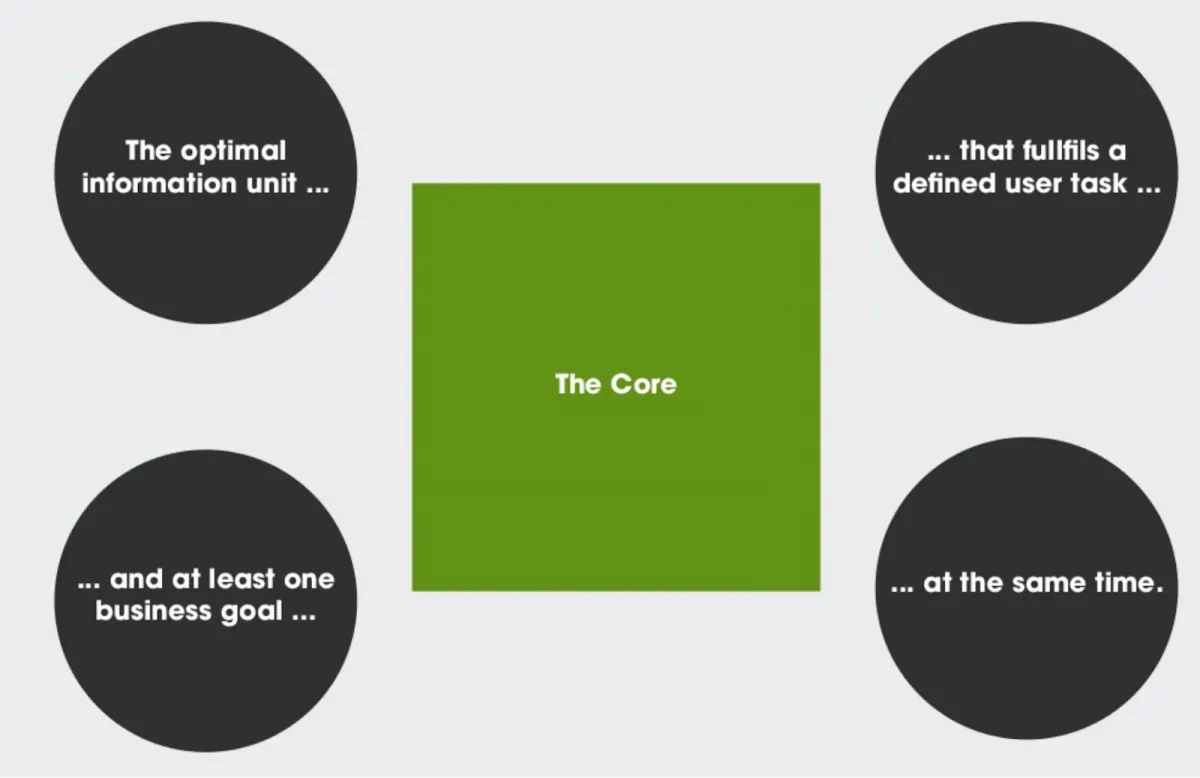
The Core Model is a thinking process that involves everyone on a project to determine the core pages of a website.
Core pages are the content of your website that fulfills at least one of your user tasks and helps you achieve a business goal at the same time. To identify them, you must know your business objectives but, most importantly, you need to understand your users’ behavior.
Once you have this information, the web designer develops the project around the core pages, and builds a UX that fits your audience.
A/B Testing

A/B testing is a common method to understand what works with specific users. It is an experiment that compares several options to find out which one is more effective.
For instance, you can create two or more versions of a landing page with different headlines, calls to action or visual elements, to understand which one brings the best results.
Even though it is called A/B testing, you are not restricted to two options. You can test as many variants as you like to get better metrics.
Click Testing
The click test is a quick and simple method to understand which elements of your pages attract your visitors. It can also help validate that your design supports your business goals.
Click testing consists of recording where users click on a given page. It tells the web developer how to organize the content of your interface, and whether users interact with your page the way you expected.
User Research Tools
These techniques can be implemented with specific tools.
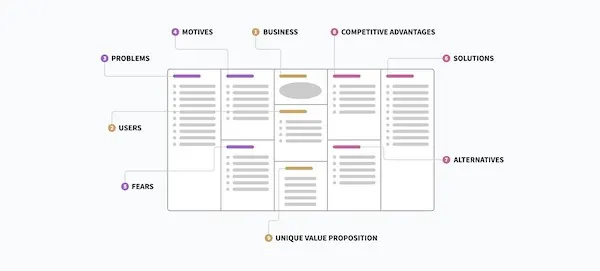
User Centered Design Canvas
The User Centered Design Canvas, also known as UCDC, is a tool that analyzes user needs and business goals in depth.
It is a PDF document divided into 9 fields, each addressing a specific need or goal of the business or of the user. Once completed, the canvas helps you understand the target user, define the product and market fit, adjust the business to the users’ needs, define a unique value proposition and plan a marketing strategy.
In the hands of a capable web designer, this information is critical to improving the UX.
Hotjar

Hotjar is software that reveals the online behavior of your users. It tracks what users do on your website, such as clicks, taps and scrolling.
Hotjar creates heatmaps and visitor recordings that show users’ desires and motivations, and which elements of your interface work and which do not. The web designer can use this data to see how easily users navigate the website and whether core elements attract visitors. As a result, the UX can be improved to better support the business goals.
Typeform
Typeform is an online program for creating surveys. A critical step in user research is analyzing the visitors of your site to understand who they are and what they want, which is not always easy when you run an online business with customers from different parts of the world.
Typeform lets you create surveys for different phases of your business. The answers you collect tell you whether your business meets your customers’ expectations and what adjustments may be needed.
For instance, you can ask your audience to rate their experience on the website and share their suggestions. With this data, the web developer knows how to improve the UX without guesswork.
How to Do User Research: Prepare, Collect, Analyze
Effective user research requires accurate planning and action. A good user research strategy usually runs in three phases: preparing, collecting and analyzing.
1. Preparing
In the preparation phase, you decide the objective of your research. Depending on your business or the nature of your project, you may need different types of information.
For instance, if you are creating a brand-new digital product, you want to understand who your target customer will be, what they expect from your product, what their main concerns are, and so on. If you are redesigning an existing website or web app, you probably know this already. You may be more interested in the problems users experience with your interface, or why they do not take an expected action.
Both the client and the web agency must take an active part in this phase, so that business goals and user needs are properly addressed. This preparation defines the questions to ask users and the methods or tools needed to collect the data.
2. Collecting
Once the goal of your user research is set, it is time to collect the data.
Do not stick to a single method or tool: the more methods you use, the more complete your data will be. But always keep the objective of your research in mind, and use only the tools that help you reach it.
3. Analyzing
This is one of the most challenging phases of user research. Every team member involved in the project should have access to the collected data and understand it.
Keep communication open during this phase. Everyone, from the stakeholders to the web developers, must agree on and trust the conclusions drawn from the data. That way, everyone acts on them to make the project successful.
How Quality User Research Impacts Your Website
Quality user research is critical for the success of a website. It must happen at a very early stage of your project, before design and development work starts.
When you handle user research efficiently, it affects your business in several ways. Without guesswork, your chances of success are much higher, and you avoid wasting time and money on a project that needs fixing along the way.
A clear picture of your target user helps the web designer create a customized UX that makes your business more profitable.
What Should You Do Next?
Start with the preparation phase: write down the objective of your research and the questions you need answered. Then pick two or three methods that fit that objective.
If you want to know more about quality user research, or need help implementing it, contact us today. QPSoftware offers user research for your project, and our web design agency in China turns the findings into the best UX for your audience.
Frequently Asked Questions
How do you do user research in UX?
Set a clear objective first: what do you need to learn about your users? Then collect data with several methods, such as surveys, A/B tests, click tests or heatmaps. Finally, analyze the results with everyone on the project and agree on the conclusions. Do it early, before design and development, so the UX is built on evidence.
What is the objective of user research?
The objective of user research is to understand your users’ behaviors, needs and motivations: their habits, the problems they face and the solutions they look for. With that knowledge, the team designs a product and a user experience that answer real needs, instead of guessing what the audience wants.
What is the difference between user research and market research?
Market research looks at a market as a whole: its size, the demand for a product or service, and the demographics of possible customers. It is mostly quantitative and helps judge whether a project is feasible. User research is mostly qualitative: it studies individual users to find out what they really need.