
Retina Display: What It Is and How to Implement Retina Design on Your Website
Updated on |By QPSoftware
A Retina display is Apple’s name for a screen whose pixel density is so high that the human eye cannot distinguish individual pixels at a normal viewing distance. Apple introduced it in 2010. For a website, it means images and graphics need twice the usual resolution, or a vector format such as SVG, to look sharp.
Retina display has become a familiar term in the world of computers and mobile devices. Since Apple launched this generation of high-resolution screens, high pixel density has become the norm, and older screens look blurry in comparison.
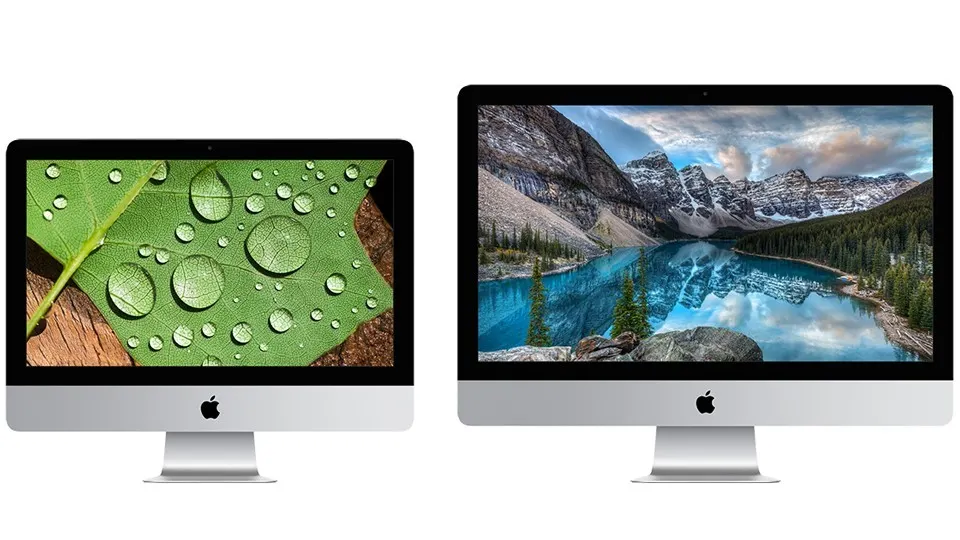
Yet websites and online stores are not always optimized for Retina displays. Since many of your visitors browse on these high-resolution screens, it would be a mistake not to optimize your website or online store for them, and Retina-ready graphics are part of our website design services.
Before explaining how to implement Retina display optimization on your site or app, let’s look at the basics of this technology: what it is, and why it matters for your business.
What Is a Retina Display?
In 2010, Apple announced a new generation of screens designed to improve the visual experience of its users, and named this technology Retina display.
The main characteristic of these screens is a pixel density of around 300 PPI (pixels per inch). The value changes with the size of the screen, but it is considerably higher than on standard monitors.
At that density, pixels become almost invisible to the human eye, which took high-resolution displays to a new level. If you have used a Retina display for a while and then gone back to a standard screen, you know how big the difference is: text and images on a Retina display are so sharp that anything less looks blurry.
This display gave online businesses an advantage: they can present their brand and products at a higher level of quality and resolution than before, which matters especially for e-commerce platforms.
All these advantages can be yours if you implement Retina display design on your website.
What Is Retina Display Design?
The arrival of Retina displays opened new opportunities for online businesses, and it also gave web designers new challenges.
Users mainly notice the quality of a site’s images, but making a website Retina-ready involves more than increasing the resolution of the photos. Retina displays affect all the graphics of a site, so a web designer needs to optimize everything again.
Retina display design is therefore the creation of a website or an app that displays correctly on high-resolution screens, which improves the overall user experience.
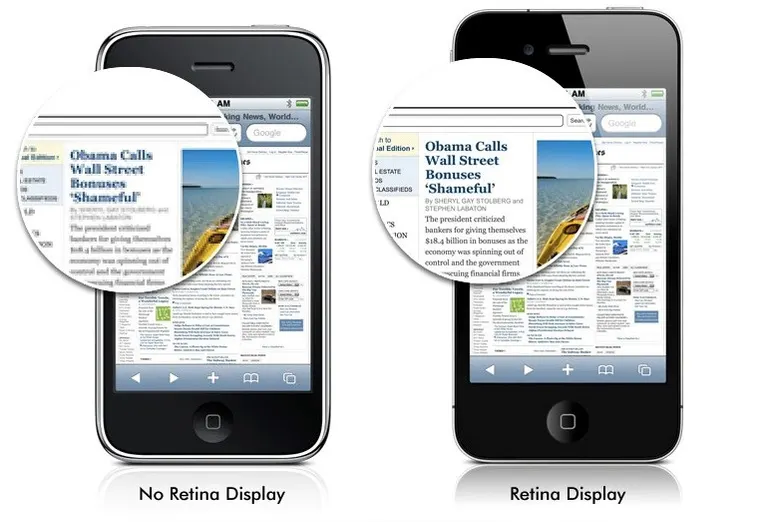
Building Retina-ready websites from scratch has become standard practice for web designers. The real challenge is optimizing an existing website for Retina displays.
Raster vs Vector Images in Retina Display Design
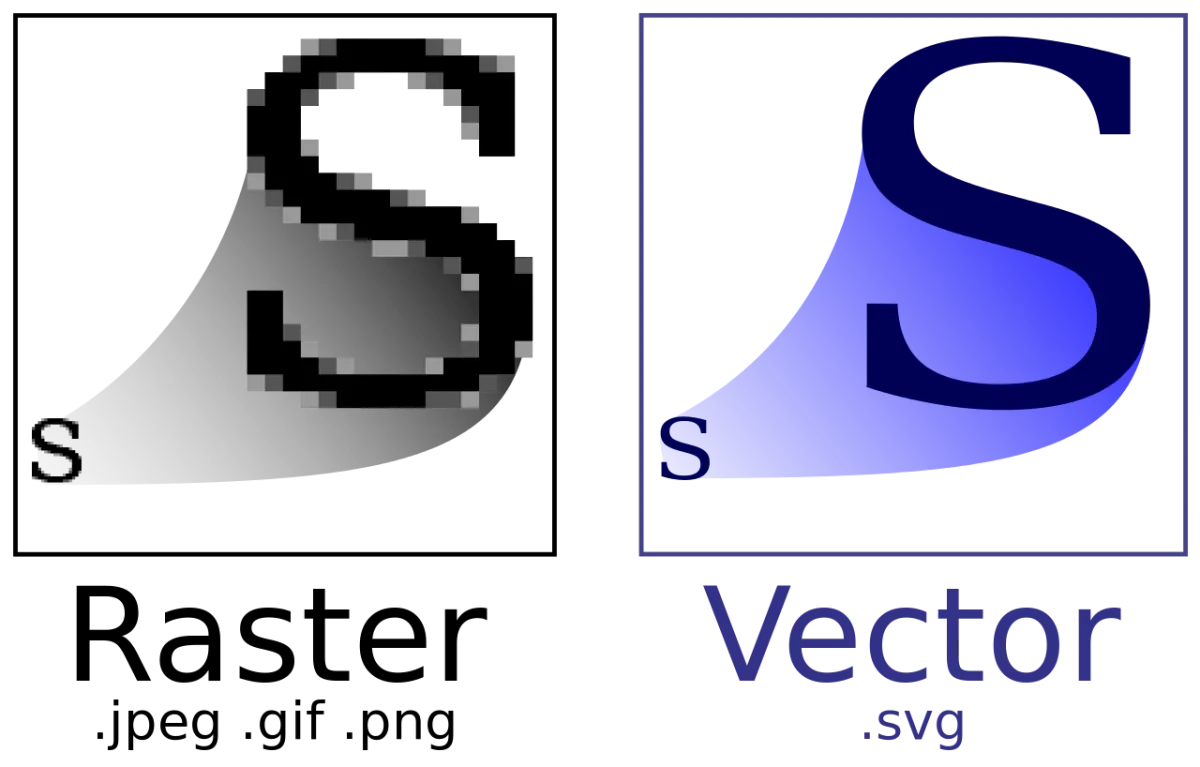
A website uses many image formats, and each one must be handled according to its type. Many images and graphic elements are raster, or bitmap, files such as JPG, PNG or GIF. These files are rendered pixel by pixel and cannot scale up. A Retina display shows each bitmap pixel on four physical pixels, so the image looks stretched and blurry. Browsers expose this density as devicePixelRatio, the ratio of physical pixels to CSS pixels, which is expected to be 2 on HiDPI and Retina displays.
The solution is to create the bitmap image at twice its display size, then scale it down to half size in the code. This can be done with HTML, CSS, JavaScript or media queries, all of which a good web designer should know and implement without causing problems.
Resolution issues are much easier to handle with the SVG format. Vector images scale up and down without losing quality: add the image to the HTML code at any size, and it adapts automatically.
Are You Ready to Implement Retina Display Design?
Once you get used to a Retina display and its very high resolution, it becomes difficult to go back to a lower one. Most users are now used to high-resolution images and graphics, and they will not settle for less.
If your website or online store is not optimized for Retina displays, it spoils your users’ experience and looks unprofessional. That hurts your brand image and, for an online store, may stop visitors from completing their purchase.
What Should You Do Next?
Check your website on a Retina screen: blurry logos, icons or product photos show where optimization is needed. Export logos and icons in SVG, and serve photos at twice their display size.
QPSoftware designs Retina-ready websites and online stores, and re-styles existing ones. Our UI/UX design agency in Shanghai can review your website and optimize it for high-resolution screens. Contact us today to discuss your project.
Frequently Asked Questions
What does Retina display mean?
“Retina display” is the name Apple gave in 2010 to its screens with a very high pixel density. The name refers to the retina of the human eye: at a normal viewing distance, the pixels are too small for the eye to distinguish, so text and images look smooth. For web designers, it means graphics must be prepared for these screens.
When was the Retina display introduced?
Apple introduced the Retina display in 2010. Since then, high-resolution screens have become common on phones, tablets and laptops, which is why websites need images prepared for them. A logo or a product photo that looked sharp on an older screen can look blurry on a Retina display if it was not exported at a higher resolution.
What is a Retina logo?
A Retina logo is a version of a website’s logo prepared for high-density screens. It is either exported at twice its display size, for example 400 pixels wide for a logo shown at 200 pixels, or saved as an SVG vector file, which stays sharp at any size. Without it, the logo looks blurry on a Retina display.