
Taobao is Alibaba’s open online marketplace in China, launched in 2003, where individuals and companies of every size sell to Chinese consumers. For a foreign company, it is less a store to open than a place to study demand, prices and competitors, while the direct sales route usually goes through Tmall Global or cross-border e-commerce services for China.
What does Taobao do?
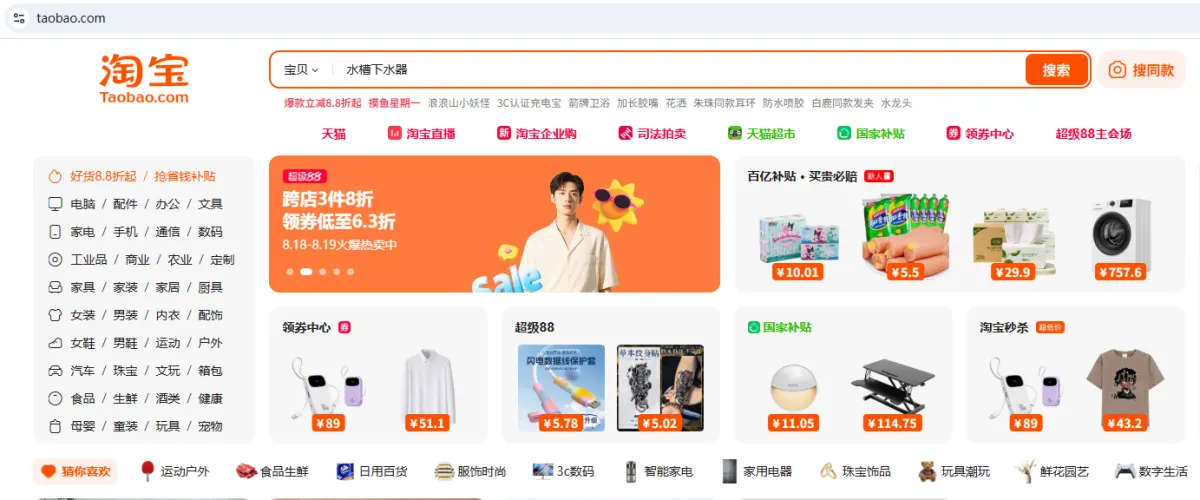
Taobao started as a consumer-to-consumer marketplace and grew into a shopping app used across every tier of Chinese cities. Its main functions:
- Search and categories: clothing, electronics, home goods, food and long-tail items, with keyword search, filters and image search.
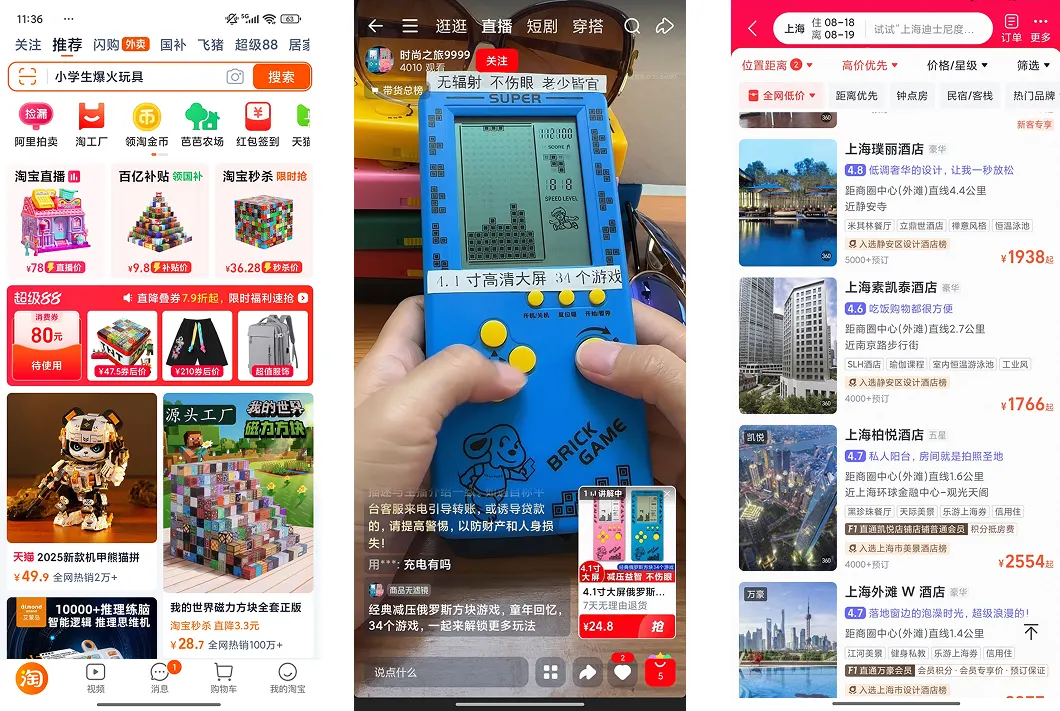
- Personalized recommendations: the “Guess You Like” feed suggests products from each user’s browsing and purchase history.
- Live shopping: on Taobao Live, merchants and hosts present products in real time and answer questions while viewers buy. Our guide to KOL marketing and live streaming in China explains how brands use it.
- Reviews and Q&A: buyer reviews, photos and questions answered by other buyers shape most purchase decisions.
- Secure payment: payment goes through Alipay, and the platform steps in when a buyer and a seller disagree. For most goods bought online, Chinese law gives buyers a seven-day return right.
Who uses Taobao?
Taobao serves hundreds of millions of shoppers in China, from large cities to small towns. Many expats in China use it too, for daily purchases and home delivery: our list of the best apps for living in Shanghai covers it.
On the selling side, Taobao is open to two kinds of stores:
- Individual sellers: a store opens after real-name identity verification, which makes Taobao the usual starting point for small entrepreneurs, artisans and resellers.
- Enterprise stores: companies registered in China open stores with more marketing tools, and Taobao offers training, logistics and financing services to its merchants.
What can a foreign company do with Taobao?
Opening a Taobao store requires Chinese identity verification or a business license registered in China, so most foreign brands do not sell on Taobao directly. They use it in three ways:
- Market research: prices, best-selling products, the way competitors present their goods, and what buyers say in reviews.
- A step toward Tmall: brands that need a brand store with stricter quality rules go to Tmall, or to Tmall Global when they have no Chinese entity.
- Your own cross-border channel: a cross-border website or a WeChat Mini Program, with Chinese payment methods, gives you control over the brand and the customer data. Our guide on how to start an e-commerce business in China compares the routes.
Taobao vs Tmall
| Taobao | Tmall | |
|---|---|---|
| Business model | Primarily C2C, catering to individual/small and medium-sized merchants | Primarily B2C, featuring brand-owned or authorized flagship stores |
| Product range | Wide price range with a rich selection of long-tail products | Strict quality control, focusing on genuine brand products |
| Buyer protection | Basic after-sales protection | Mandatory provision of invoices and extended return/exchange periods |
| Typical buyers | Users seeking cost-effectiveness and personalized choices | Users prioritizing brand reputation and after-sales guarantees |
Both belong to Alibaba Group and share the same shopping app: a search on Taobao also shows Tmall stores. JD.com works differently again, with a large self-operated retail business and its own logistics network.
How QPSoftware can help
Taobao shows what Chinese buyers want and what they pay, but selling to them as a foreign brand usually means another channel. QPSoftware, a digital agency in Shanghai since 2009, can help you launch a cross-border store for Chinese buyers, with payment in RMB and the integrations Chinese shoppers expect.
Frequently Asked Questions
Can a foreign company open a Taobao store?
In practice, rarely. A Taobao store needs real-name verification of a person or a business license registered in China, and the store’s payments go through a Chinese Alipay account. A foreign company without a Chinese entity usually sells through Tmall Global, another cross-border marketplace or its own cross-border website. A company with a Chinese subsidiary can open an enterprise store or a Tmall store.
What is the difference between Taobao and Tmall?
Taobao is an open marketplace where individuals and small companies sell, with a very wide range of products and prices. Tmall is the business-to-consumer side of Alibaba, reserved for brand owners and authorized sellers who meet stricter rules on qualifications, invoices and after-sales service. Both appear in the same app, and a Taobao search shows Tmall stores in its results.
Can foreigners living in China shop on Taobao?
Yes. Foreigners living in China shop on Taobao every day for household goods, clothing and electronics, with delivery to their address. They pay through Alipay, which accepts international cards such as Visa and Mastercard once linked to a verified account. The app and the seller chats are mostly in Chinese, so a translation tool helps with product details and returns.