
Tmall is Alibaba’s business-to-consumer marketplace in China, where brand owners and authorized sellers run official stores. Domestic Tmall requires a company registered in China; foreign brands without one use Tmall Global, its cross-border version. Both reach the same Chinese shoppers through the Taobao and Tmall apps, with stricter quality rules than open marketplaces.
What is Tmall?
Tmall began as the brand section of Taobao and became a separate marketplace for branded goods. Its categories cover fashion and beauty, electronics, home furnishings, groceries, and mother and baby products, sold by Chinese and international brands. Unlike Taobao, where anyone can open a store after identity verification, every Tmall store is reviewed before it opens: the seller must own the brand or hold an authorization from its owner.
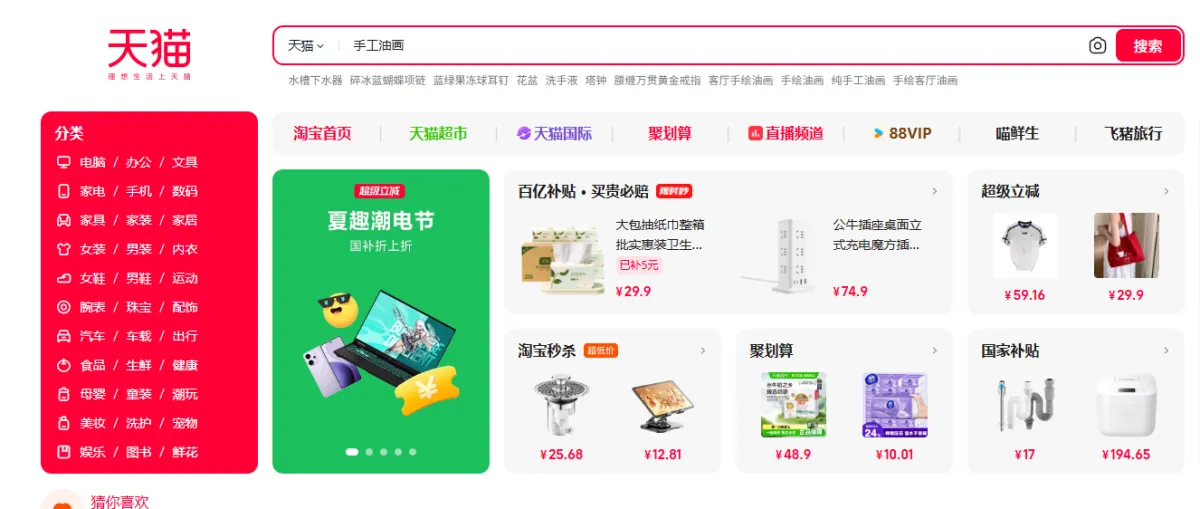
Why Chinese shoppers trust Tmall
- Vetted sellers: Tmall reviews each company’s qualifications and each brand before a store opens, which reduces the risk of counterfeits.
- Service commitments: invoices, after-sales service and return rules are stricter than on open marketplaces.
- Payment and delivery: payment goes through Alipay, and orders ship through the logistics partners of Alibaba’s network.
- Shopping festivals: Double 11 (November 11), which started on Tmall in 2009, and the 618 sales in June concentrate a large share of the year’s orders, with heavy discounts and live streams.
Tmall or Tmall Global: which one for a foreign brand?
The answer depends on whether you have a company in China.
| Tmall | Tmall Global | |
|---|---|---|
| Seller | Company registered in China | Company registered outside mainland China |
| Goods | Imported through general trade, or made in China | Sold to Chinese consumers under the cross-border retail import rules |
| Settlement | In RMB, to a Chinese account | Usually in a foreign currency, through cross-border payment |
| Best for | Brands with a Chinese entity and a local supply chain | Brands testing China without a local entity |
Tmall Global lets you sell to China without a Chinese entity: each platform sets its own entry requirements, fees and rules, and the buyer limits and tax rules of cross-border retail imports apply. Our article on selling in China without a Chinese company compares this route with the others, and the guide to cross-border e-commerce in China explains the rules.
How to open a Tmall store
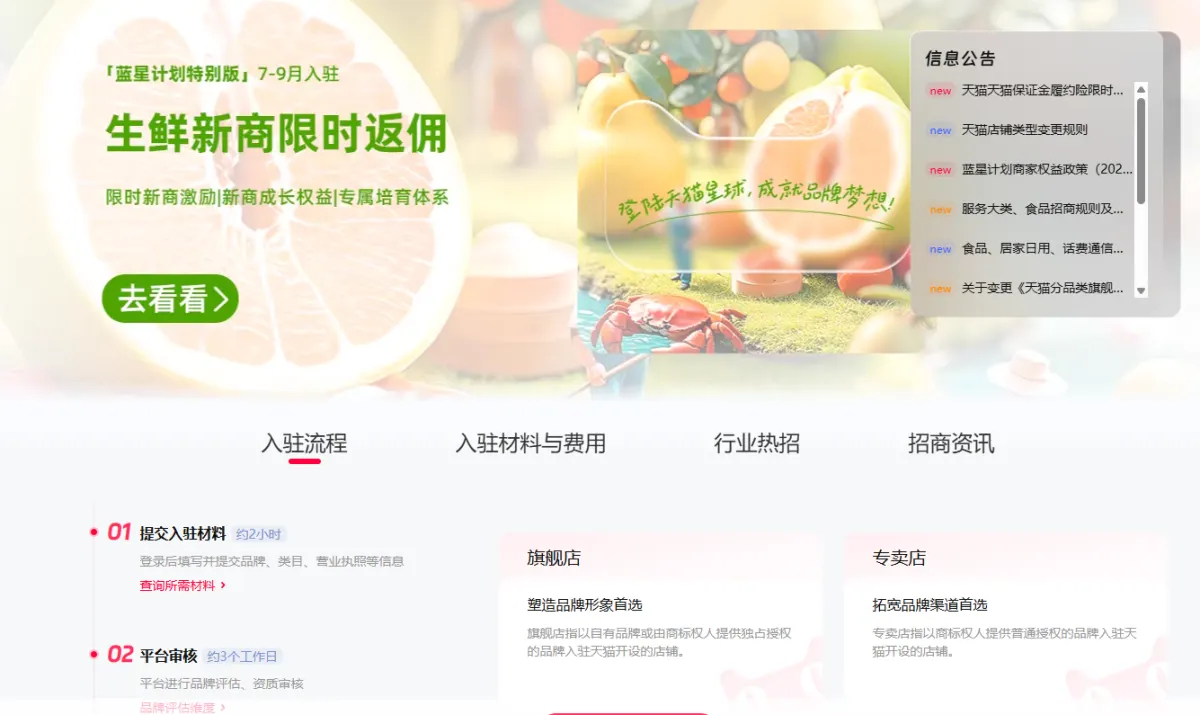
The Tmall merchant recruitment page (in Chinese) lists the materials and fees by category. The steps are:
- Choose the store type: a flagship store is run by the brand owner or under an exclusive authorization; a specialty store sells one brand under an ordinary authorization; a franchise store sells several brands in one category.
- Submit the materials: business license, brand registration or authorization, and the categories you want to sell in.
- Pass the review: Tmall assesses the brand and checks the qualifications.
- Sign and pay: once approved, the merchant pays a deposit and an annual technical service fee, which vary by category, and the store opens.
Store design
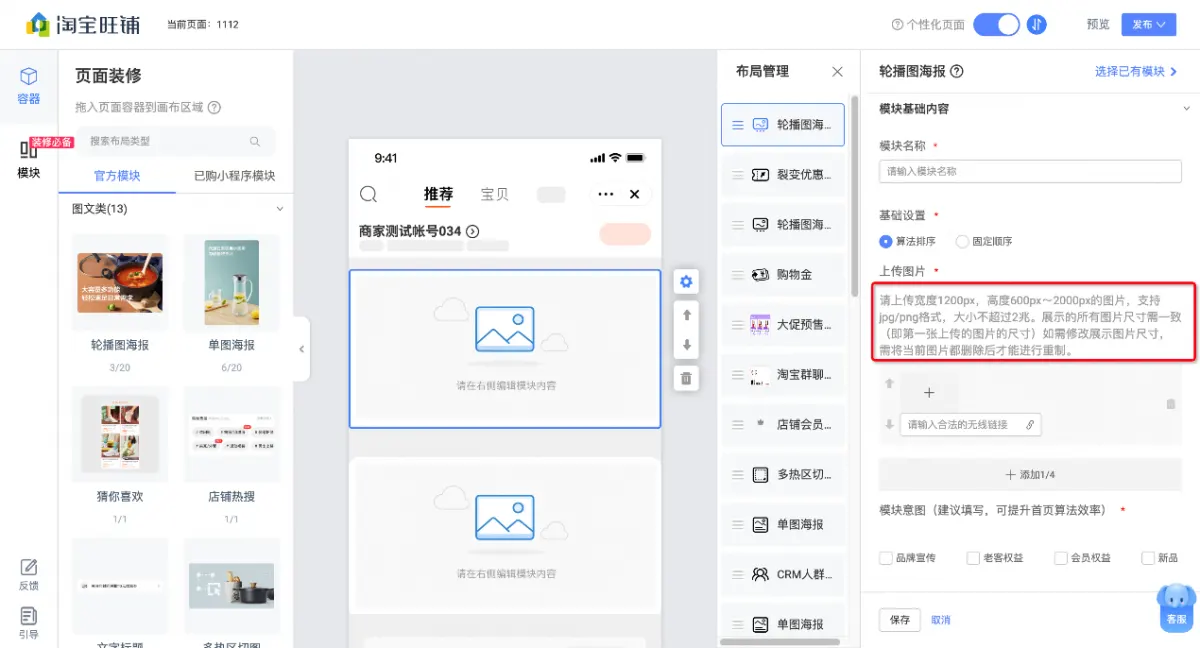
Tmall and Taobao provide store design tools with templates and modules, so each store can follow the brand’s style: home page layout, colors, banners and product pages. A clear store with good product images and copy in natural Chinese keeps shoppers browsing and converts better.
Tmall competes most directly with JD.com, which combines its own retail business with an open marketplace and its own delivery network.
How QPSoftware can help
A Tmall Global store reaches Alibaba’s shoppers, but the brand also needs its own channels and the customer relationship that goes with them. QPSoftware, a digital agency in Shanghai since 2009, works as a cross-border e-commerce agency for foreign brands: cross-border websites, WeChat stores and Mini Programs, with payment in RMB and settlement in your currency.
Frequently Asked Questions
Can a foreign company open a Tmall store?
Not on domestic Tmall without a Chinese entity: it requires a business license registered in China. A foreign company can apply to Tmall Global, the cross-border version, with a company registered outside mainland China and ownership or authorization of the brand. Each application is reviewed, and the requirements, deposit and fees depend on the category, as listed on Tmall’s merchant pages.
What is the difference between Tmall and Taobao?
Taobao is an open marketplace where individuals and small companies sell after identity verification. Tmall is reserved for brand owners and authorized sellers, whose qualifications and brands are reviewed before the store opens, with stricter rules on invoices and after-sales service. Both share Alibaba’s shopping apps, so a Taobao search also shows Tmall stores.
How does Tmall differ from JD.com?
Tmall is a marketplace: brands run their own stores and ship through logistics partners. JD.com also runs a large self-operated retail business, buying goods and selling them itself, and delivers most orders through its own logistics network. JD is known for electronics and home appliances; Tmall for fashion, beauty and a very wide range of brands. Many brands sell on both.