
Alipay is one of China’s two leading mobile wallets, run by Ant Group. It is a standalone app where people pay in stores and online, transfer money, pay bills, borrow and invest. For a foreign company, it is a payment method Chinese customers trust, and it can be accepted from abroad and settled in your own currency.

What Alipay does for its users
Alipay was created by Alibaba to pay on its marketplaces, such as Taobao, and grew into a wallet used for everyday payments far beyond them. Stripe’s documentation describes it as a digital wallet with more than a billion active users.
Payment is only the entry point. Alipay gathers services that, in other countries, would be spread across a bank, a card, a utilities portal and several city apps:
- Payments: users scan a merchant’s QR code or show their own payment code, in stores and online, and transfer money to bank cards or other Alipay accounts. Small payments can skip the password.
- Daily services: mobile top-ups, utility bills, medical appointments, public transport, shared bikes and some government services, from the same app.
- Finance: Yu’e Bao for savings that can be withdrawn at any time, Huabei for short-term consumer credit, and Zhima Credit (Sesame Credit) scores, which can waive deposits for some rentals.
- Security: biometric login and real-time risk monitoring of transactions.
Who uses Alipay, and how they register
Chinese users
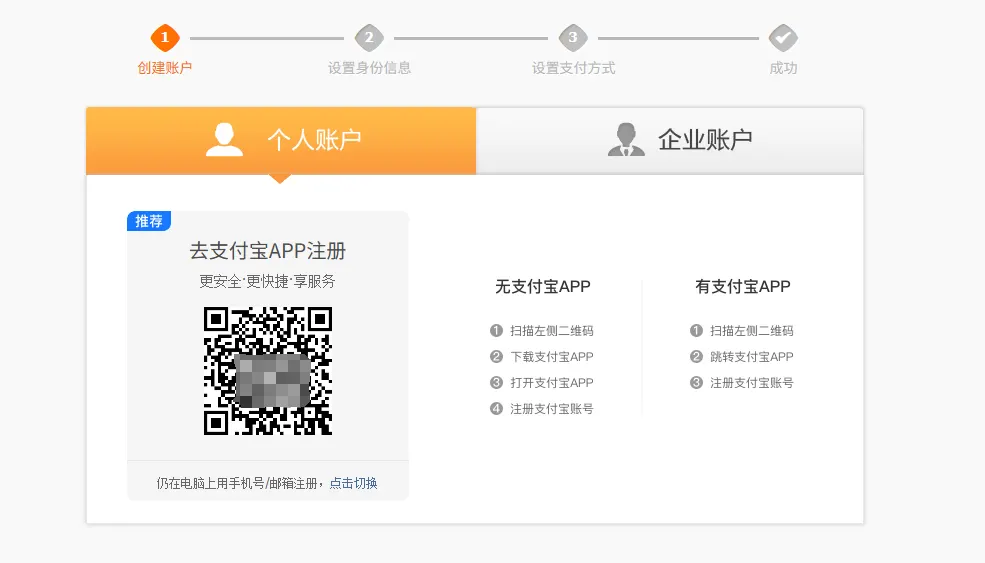
- Download Alipay from an app store and sign up with a Chinese mainland mobile number and a verification code.
- Complete real-name verification: photos of both sides of the ID card, then facial recognition, to unlock all features.
- Set a payment password, used to confirm transactions and withdrawals.
Foreign visitors and residents
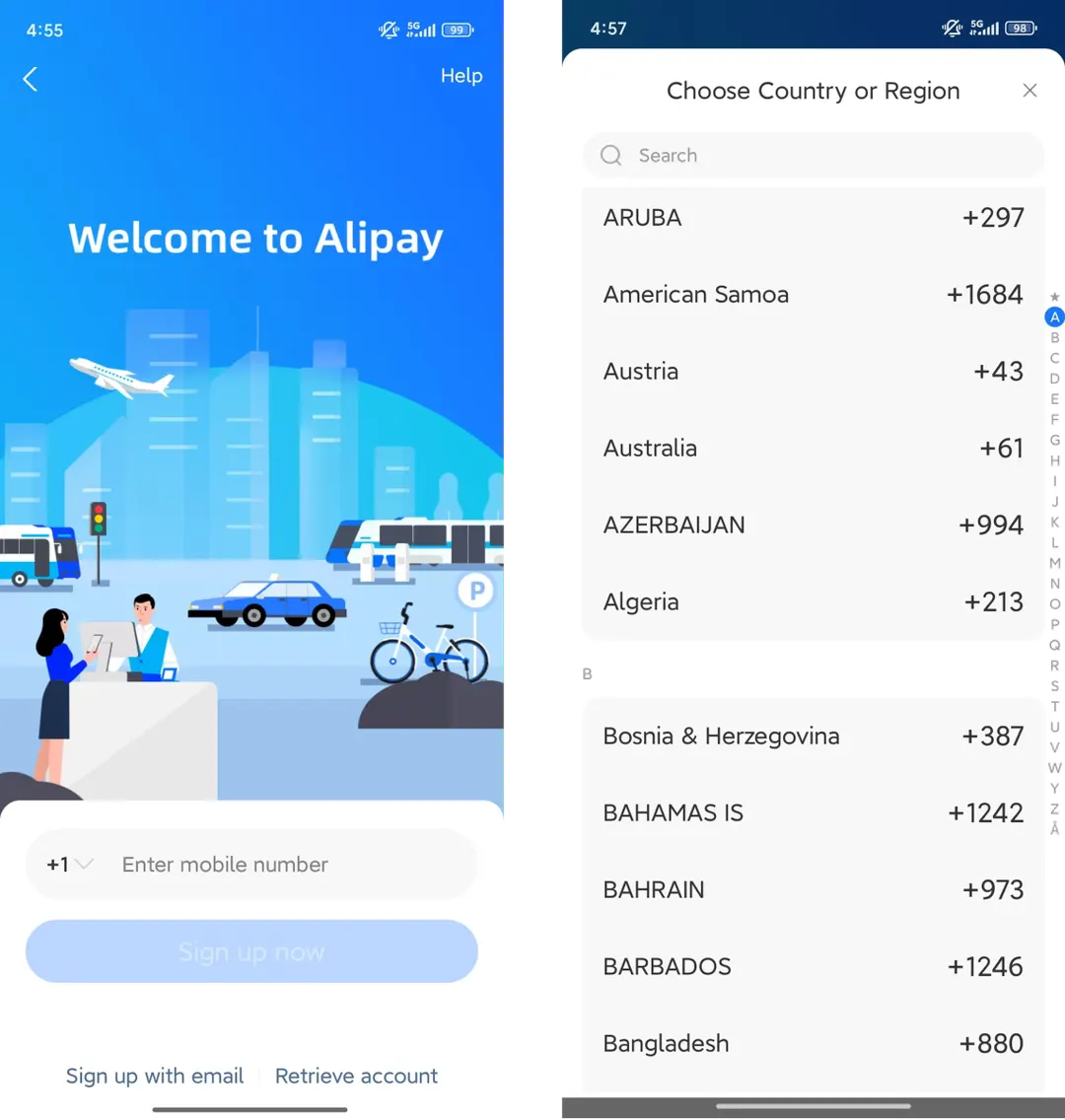
Foreigners can register with an overseas mobile number and an international SMS code, in an English interface, then link an international card. As of April 2024, foreign users could link cards such as Visa and Mastercard to Alipay and WeChat Pay, with a single transaction limit of 5,000 US dollars and an annual cap of 50,000 dollars, according to China’s government website. Alipay may also ask for passport details and facial recognition to verify the account. The app then works in shops, restaurants, hotels and on public transport.
Our article on WeChat Pay and Alipay around the world explains where Chinese travelers can use both wallets abroad.
How a foreign company can accept Alipay
There are two routes, depending on whether your company has an entity in mainland China.
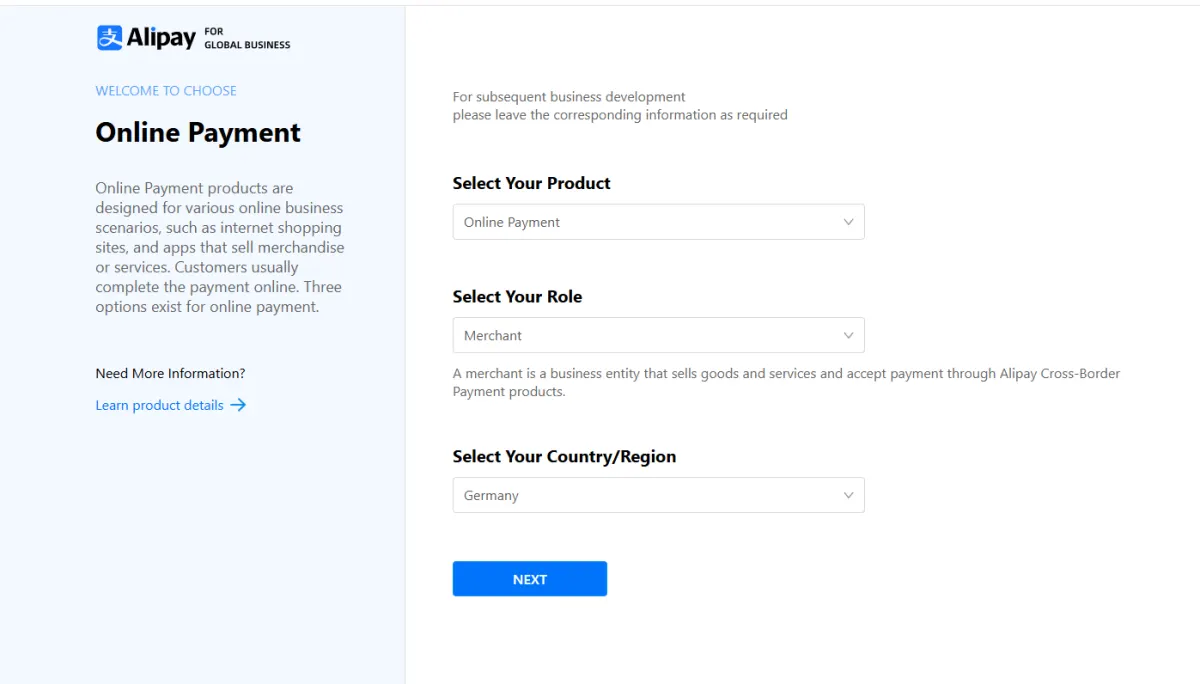
- Without a Chinese entity: Alipay’s cross-border payment products let a merchant registered abroad sell to Chinese customers. The customer pays in RMB in the Alipay app, and the merchant is settled in a foreign currency. Merchants apply on Alipay for Global Business, now through its acquiring brand Antom, or through a payment provider that already holds the contract. Alipay+, a gateway of Ant International, connects merchants with Alipay and other mobile wallets through a single integration, online and in stores.
- With a Chinese entity: the company opens a merchant account on the Alipay Open Platform with its Chinese business license, the legal representative’s ID and a corporate bank account, and is settled in RMB.
Once the account is open, Alipay has separate APIs for desktop websites, mobile websites and native apps, and Alipay Mini Programs have their own payment flow. Our team handles WeChat Pay and Alipay integration in each of these channels, including refunds and currency display. Typical users of the cross-border route are online stores, travel and ticketing companies, and international brands testing cross-border e-commerce in China.
How Alipay differs from WeChat Pay and UnionPay
WeChat Pay lives inside WeChat: people pay in chats, Official Accounts and Mini Programs without opening another app. Alipay is a separate app that people open to pay, and its strength is the financial and daily services built around the wallet. Most Chinese consumers have both and use the one that the context offers.
UnionPay is a different layer: China’s bank card network. Alipay and WeChat Pay wallets are often funded by UnionPay bank cards. For a checkout, the comparison of China payment gateways sets out which methods to offer first.
How QPSoftware can help
QPSoftware integrates Alipay into e-commerce websites, mobile apps and Mini Programs, alongside WeChat Pay and UnionPay. For Lucrin Geneva, a luxury leather goods brand, we implemented Alipay, UnionPay and WeChat Pay on a localized website. When you are ready to sell to Chinese customers, our developers in Shanghai can integrate Chinese payment methods into your checkout, with the cross-border route that fits your company.
Frequently Asked Questions
Can a foreign company accept Alipay without a Chinese entity?
Yes. Alipay offers cross-border payment products for merchants registered outside mainland China. The Chinese customer pays in RMB in the Alipay app, and the merchant is settled in a foreign currency. The account is opened with Alipay for Global Business, now Antom, or through a payment provider that holds the contract with Alipay. A company with an entity in China can instead open a domestic merchant account.
Can foreigners use Alipay in China?
Yes. Visitors can register with an overseas mobile number and link an international card such as Visa or Mastercard. As of April 2024, China’s government website reported a single transaction limit of 5,000 US dollars and an annual cap of 50,000 dollars for these cards. Alipay may ask for passport details to verify the account. The app then works in most shops, restaurants and on public transport.
How does Alipay differ from WeChat Pay?
WeChat Pay is built into WeChat, so people pay inside chats, Official Accounts and Mini Programs without leaving the messaging app. Alipay is a separate app focused on payments and finance, with savings, consumer credit and credit scores around the wallet. For a merchant, the usual answer is to offer both, since Chinese shoppers have their own preferred wallet.