
WeData (We分析) is WeChat’s official mini program analytics tool. Mini program owners sign in with the WeChat account that manages the mini program and follow real-time data, user acquisition, behavior paths, heatmaps, user personas, retention and custom events. It needs no extra setup, which makes it the first analytics tool of most mini programs. Its interface is in Chinese.
Why a mini program needs behavior analytics
Mini programs are a core channel to reach users in WeChat, who open them without installing an app and leave just as easily. Daily active users and conversion rates show the result, not the reason users leave. WeData follows clicks, time on page and navigation to answer three questions:
- Why do users come?
- How do they use the services?
- Why do they leave?
For a website, the same questions go to Baidu Analytics; across apps, websites and mini programs, some companies add a behavior platform such as Sensors Data.
What WeData analyzes
Behavior paths and events
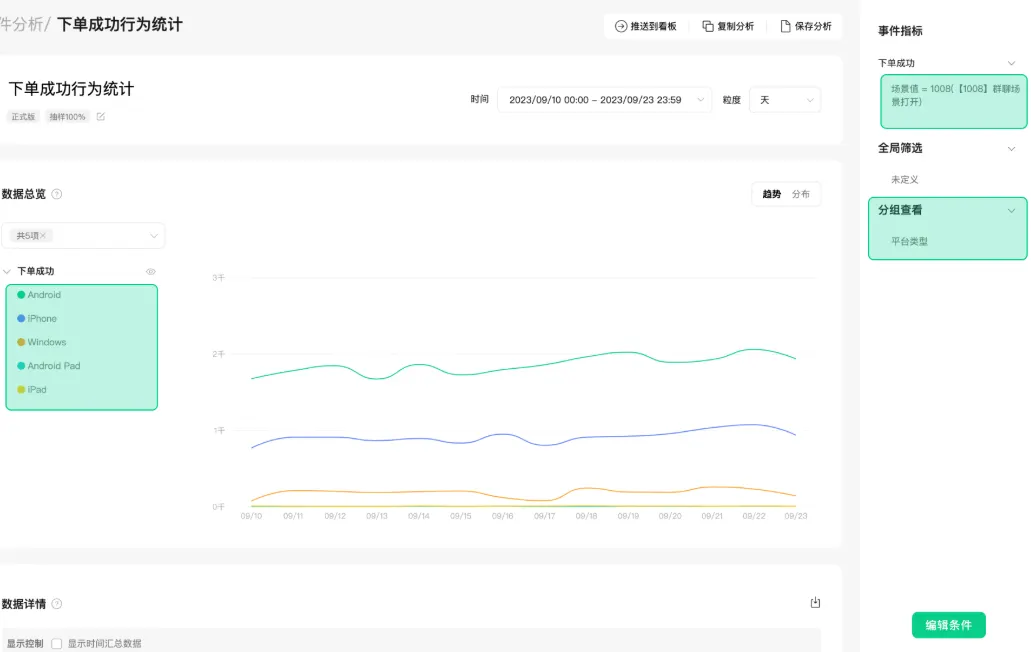
Event analysis and conversion funnels rebuild the user journey from entering the mini program to completing a goal, such as an order. Results can be split by platform (Android, iPhone, Windows, tablets) to find where users drop off, for example a promotion page that loads too slowly.
Heatmaps
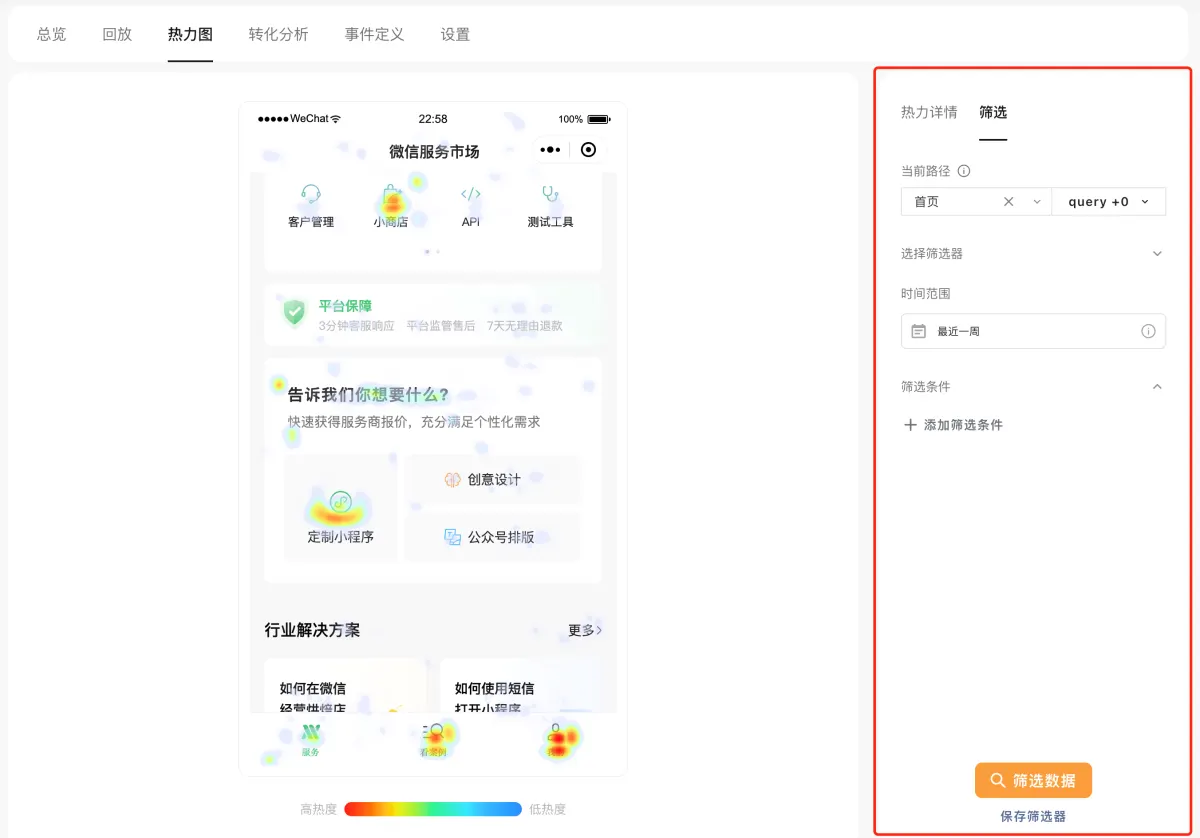
Heatmaps show where users tap on each page, the busy zones and the blind spots.
User personas
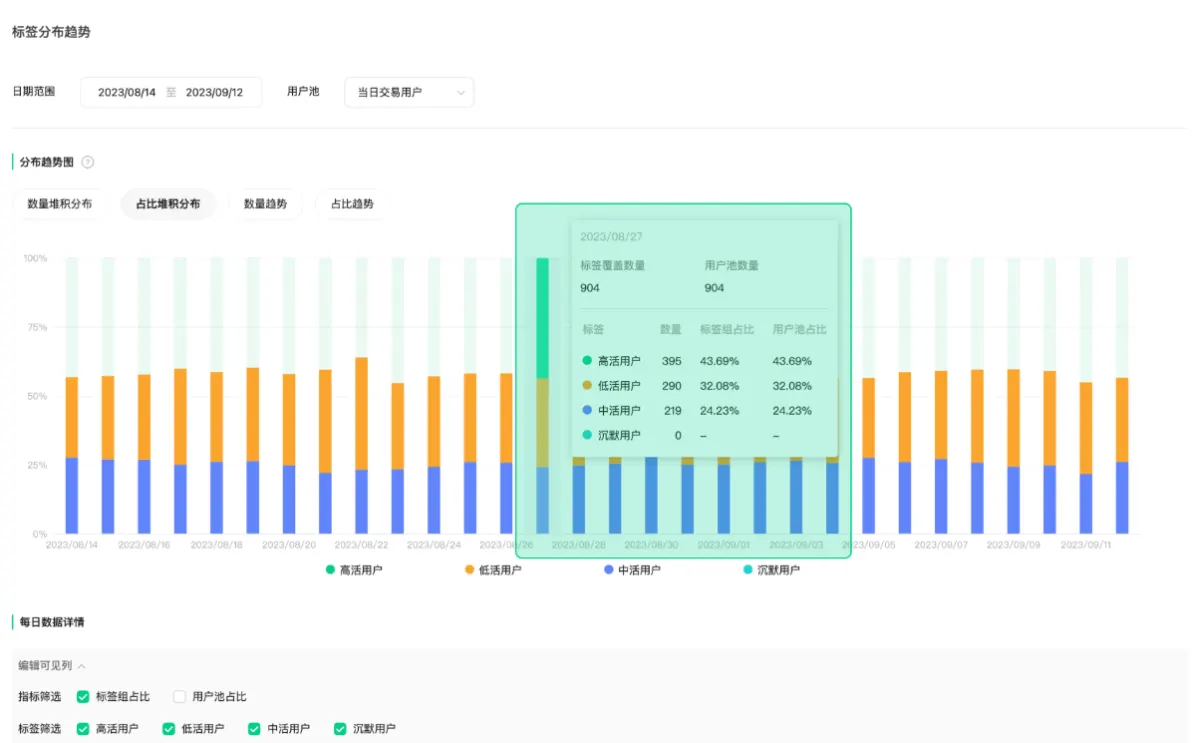
WeData provides groups of persona tags, such as user activity tags, and shows their distribution across user pools over time. Owners see how a group of users changes, for example the share of highly active users among buyers of the day.
Retention and churn
Day 1 retention is only a start. Comparing retention across user segments, for example with the RFM model (recency, frequency, monetary value), shows which users have the most value and deserve tailored offers to buy again.
How QPSoftware can help
WeData shows what users do; the mini program has to be designed so that its key steps can be measured and improved. Our WeChat Mini Program development team in Shanghai sets up the events and funnels that matter to your business from the start. When you have your WeChat Mini Program developed by us, analytics are built in, and we read the reports with you after launch. Our guide to WeData shows how to sign in and which reports to read first.
Frequently Asked Questions
Is WeData free for mini program owners?
WeData is WeChat’s official tool, built into the mini program environment. In 2022, its core reports were free for mini program owners, and it needs no tracking code for the basic data. Some advanced analyses may depend on the version or on extra setup. Check the current terms when you sign in, since WeChat updates its tools and their conditions regularly.
Is WeData available in English?
No. WeData’s interface and its reports are in Chinese, even when the mini program itself is in English. Foreign brands usually ask their developer or their Chinese team to set up the reports and to share the key figures in English. Browser translation helps with the menus, but the definitions of the metrics are best read by someone who reads Chinese.
How does WeData differ from Baidu Analytics?
WeData only covers mini programs and works with no extra setup, since it comes from WeChat itself. Baidu Analytics (Baidu Tongji) is built first for websites and shows the Baidu search terms behind each visit. A brand with a website and a mini program often uses both, and a platform such as Sensors Data when it needs behavior data across every channel.