Website Backup: Why It Matters and How to Backup a Website
Updated on |By QPSoftware
Here is how to backup a website: use the backup tool of your hosting control panel, such as cPanel; install a backup plugin if your site runs on WordPress; or download the website files and the database manually. Keep copies in more than one place, including a cloud service, and back up as often as your content changes.
Key takeaways
- A backup lets you restore your website after a hack, malware, a hardware failure, a human error or a failed update.
- Back up whenever you publish new content; a site that changes every day needs daily backups.
- Store backups in more than one place, including at least one cloud service.
- cPanel and WordPress plugins make backups simple; a manual backup gives more control but requires technical skills.
- Without a backup, a lost website means starting again from scratch, rankings included.
When the web is a critical part of your business, you cannot leave anything to chance. Your website is a precious channel for promoting your brand or your products, and for generating revenue. That is why you must take every precaution to make sure it does not go down and stay down. The best way to avoid that situation is to back up your website regularly and safely, as part of your ongoing website maintenance.
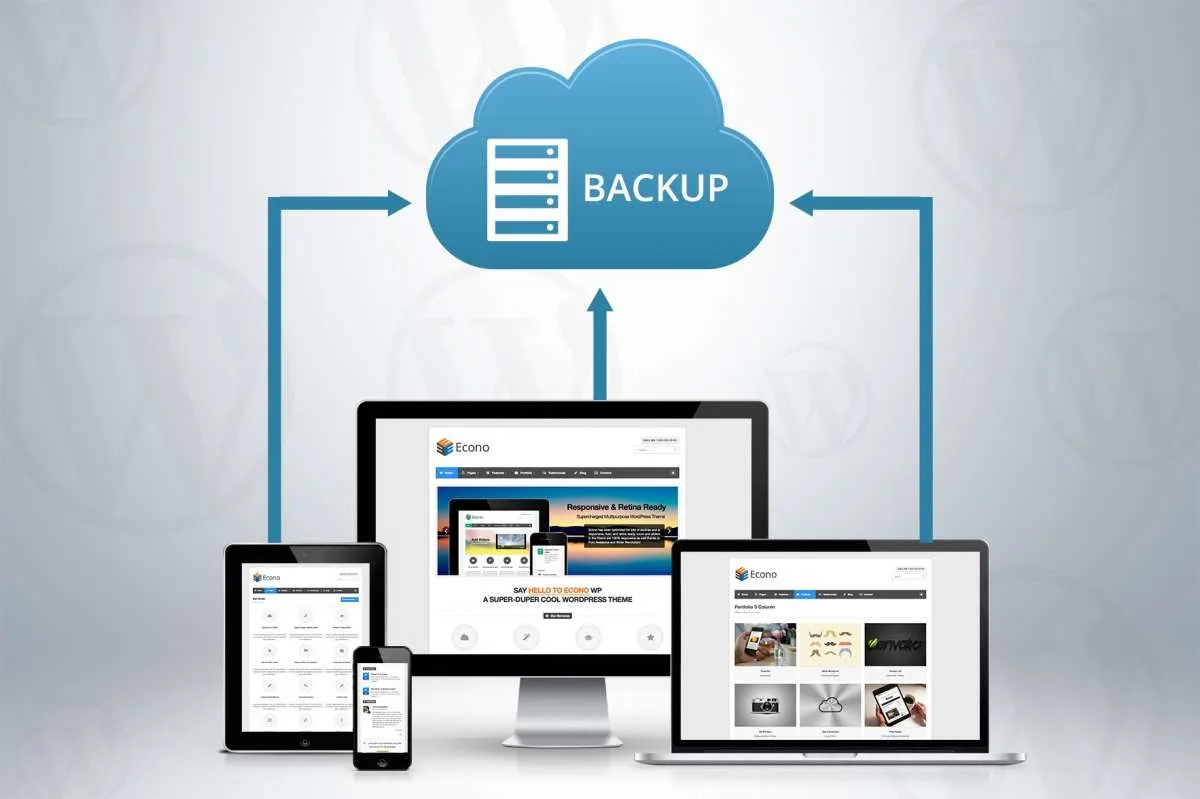
Backing up files is a common practice among computer users, yet it remains one of the most forgotten or overlooked tasks. This should never be the case with your website.
To understand why backing up a website matters, and to make sure you never forget this vital task again, we will look at three aspects of website backups:
- Why you need to back up your website
- How often you should back up your website
- How to back up your website safely
Why Is a Website Backup Important?
Building and promoting a website is a huge investment of time and money. If something goes wrong and you have no backup, you will have to start again from scratch.
Not having a backup of your website is like walking a tightrope without a safety net. In a matter of seconds, everything you have built can be gone for good, with dramatic consequences.
In 2017, a survey reported by CloudTweaks estimated that downtime cost businesses $26 billion a year in lost revenue, and that an average enterprise lost about $686,000 for every hour its website was down.
Your website is probably not close to those figures, but they give an idea of the financial damage you may suffer if something goes wrong. Then consider the impact of downtime on your visitors: if they cannot access your website, your reputation and credibility suffer.
Downtime also affects your rankings. Once your pages are lost beyond recovery, the money and energy you spent on SEO are gone too. Even if you rebuild your website, you will have to start again to regain your previous rankings on Google, which could take months if not years.
So if something happens to your website, you need to act quickly, and the only way to do that is to have a backup that lets you recover your work in just a few minutes.

Unfortunately, the chances that your website will run into problems are high. Threats come in different forms:
Website hackers. We often associate hackers with people who try to access a system to steal money or private information. However, many hackers break into websites and crash them just to cause trouble, or to prove their skills. Once your data has been compromised, there is no way to recover it unless you have a backup. Hackers are everywhere, and your website may face several attacks a day.
Malware and viruses. The Internet is full of malware and viruses, and new ones are discovered every day. You can catch them in countless ways, even while performing tasks usually considered safe. Sometimes they do not crash your website entirely but make it behave strangely, which hurts the user experience and performance. Cleaning your system files can take time and be a daunting task. Restoring a clean backup of your website is by far the easiest and safest solution.
Hardware problems. When you deal with machines, something can always go wrong. Your hosting server can catch fire, crash, or fail in other ways. A good hosting company usually keeps a backup of your files. However, never assume a third party will always take care of your business as you would. Your own up-to-date backup gives you better peace of mind.
Human mistakes. Deleting a file or clicking the wrong button happens more often than you might imagine, and the risk grows when more people work on a website. It is not a major problem if you have a backup ready.
Updates that go wrong. Platforms such as WordPress regularly release updates to improve performance and security. Sometimes the fix becomes the problem: once updated, your website no longer works correctly, or crashes completely. If that happens, you will be very grateful to have a backup at hand.
These are some of the most common reasons why a website goes down. Sooner or later, at least one of them will happen to you, and when it does, you must be ready to act quickly.
How Often Should You Back Up Your Website?
There is no single answer to this question: it mainly depends on the type of website you run.
If you only add new content a few times a month, you can back up your website less often, for instance every time you upload new content.
However, if you work on your content regularly and have a lot of interaction with your users, you must make daily backups.
As a general rule, the more often you back up your website, the better. As you will see, backing up a website is neither difficult nor time-consuming, so a daily or weekly backup schedule is a savvy practice that will spare you a lot of pain down the road.
How to Backup a Website: 3 Methods
Before looking at how to back up your website, a few words about where to store the backup files.
We always recommend storing backup files in more than one place, including at least one cloud service. Saving the files on your computer or on an external hard drive is good practice, but it is not risk-free: a hardware crash can wipe out all your precious files.
So, besides storing the backup on a hard drive, upload it to at least one cloud service. Your files stay safe, and you can access them whenever you need them.
Once you have decided where to store the files, choose how to back up your website. You have three main options.
1. Back Up Your Website with cPanel
cPanel is a user-friendly dashboard provided by many hosting providers. From cPanel, you can make changes to your website files, and one of its preset functions backs up your website.
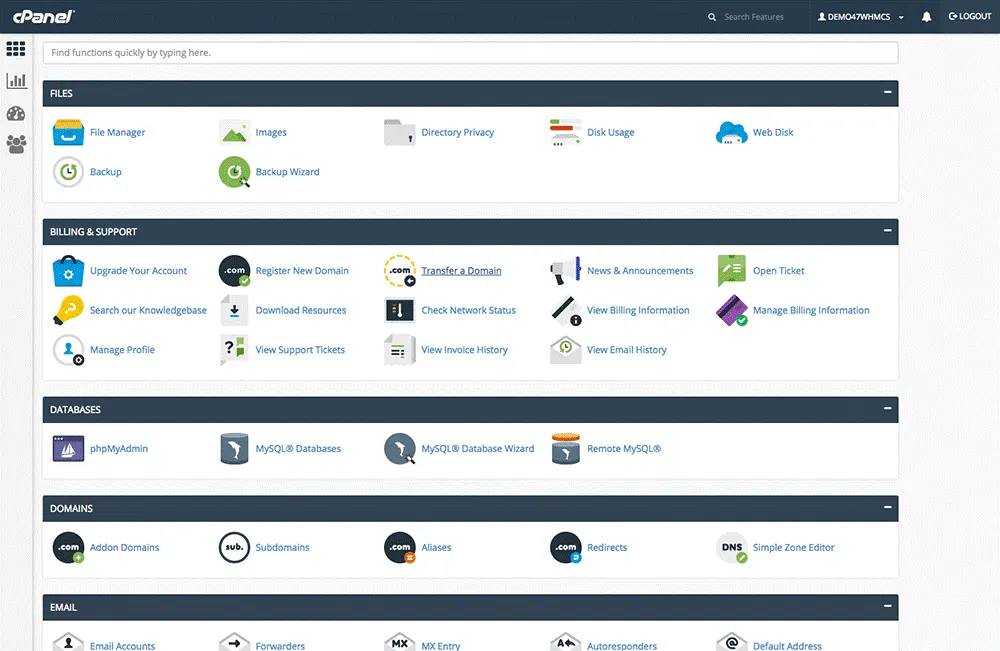
Go to the “Files” section and click “Backup”. You will see two options: a full backup, commonly used when you move your website to a different hosting service, or a partial backup, suitable for restoring your database on your current host. Choose the option you prefer and click “Generate Backup”. Once the backup is complete, go to the section “Backups Available for Download”, find the file with the latest backup, download it to your computer, and don’t forget to upload a copy to the cloud.
2. Use a WordPress Backup Plugin
If your site runs on WordPress, plugins make your backup duties much easier. When this article was first written in 2018, popular options included UpdraftPlus, BackupBuddy and Snapshot Pro. Plugins change over time, so check that the one you choose is still maintained.
Install the plugin you prefer, adjust the settings to your liking, and the system backs up your website for you.
3. Make a Manual Backup
This option is more complicated and requires some expertise, but it gives you more control over your files.
To start a manual backup, access your website files on your web server, for instance with the File Manager in cPanel. Look for the root folder, usually labeled “public_html”, and download a copy of it. If your website uses a database, download it too, using phpMyAdmin, which cPanel includes under Databases. Once the download is complete, don’t forget to upload a copy to the cloud.
As you can see, a manual backup is less straightforward than the other options. Unless you have the needed skills, we advise you to rely on a professional website maintenance and support service.
What Should You Do Next?
Backing up your website is a vital task that must be taken seriously. You have several options: whichever method you choose, just make sure you do it.
You can also rely on professionals. QPSoftware is a web development agency in Shanghai, and our website maintenance services help make sure your website keeps running smoothly. If an unfortunate event takes your site down, we can react quickly to restore a clean backup of your website. Contact us today and we will explain how our services can benefit your business.
Frequently Asked Questions
What is a website backup and why is it crucial?
A website backup is a copy of your website files and database, stored somewhere safe. It is crucial because hackers, malware, hardware failures, human errors and failed updates can take a website down at any time. With a recent backup, you can recover your work in minutes; without one, you rebuild from scratch and must win back your rankings.
How often should you back up a website?
It depends on how often your website changes. If you add content only a few times a month, back up every time you publish something new. If you update content regularly and interact a lot with your users, back up every day. As a rule, the more often you back up, the better: a daily or weekly schedule is a good habit.
Where should you store website backups?
Store backups in more than one place. A copy on your computer or on an external hard drive is a good start, but a hardware crash can destroy it. Upload at least one copy to a cloud service, so your files stay safe and you can access them whenever you need to restore your website.