
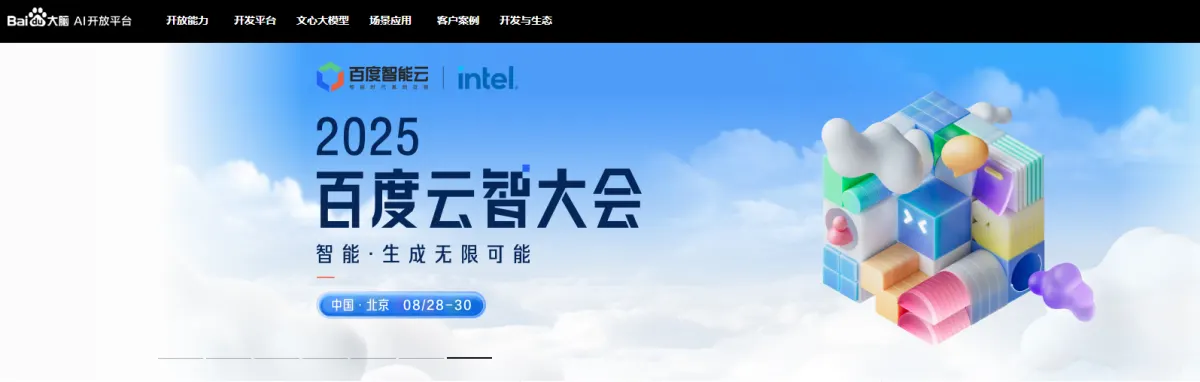
Baidu AI is the artificial intelligence technology system developed by Baidu Inc., the company behind the Baidu search engine. It is built on the Wenxin (ERNIE) large language models and the PaddlePaddle deep learning framework, and covers natural language processing, computer vision and speech recognition. Companies reach it through the Baidu AI open platform and Baidu AI Cloud.
Baidu AI core technologies
Baidu AI is not a single app. It is a set of technologies that Baidu uses in its own products and sells to other companies:
- Wenxin (ERNIE) large language models: Baidu’s family of large language models, used for text generation, semantic understanding and translation. Baidu launched its ERNIE Bot chatbot in March 2023 and has released new model versions since then; the official Wenxin site lists the current ones.
- PaddlePaddle: Baidu’s open-source deep learning framework, used to train and deploy models.
- Speech and vision APIs: speech recognition, speech synthesis, image recognition and OCR (optical character recognition), offered as ready-made services on the open platform.
- DuerOS: the conversational AI system behind Baidu’s Xiaodu smart speakers and displays.
- Apollo: Baidu’s autonomous driving platform, and Apollo Go, its robotaxi service in Chinese cities.
Who uses Baidu AI
Consumers meet Baidu AI inside Baidu’s own products: the Baidu App and its search results, the ERNIE chatbot, Xiaodu devices and Apollo Go rides. Baidu now adds AI-generated answers to its search results, a change our guide to Baidu SEO in China explains for marketers.
Developers and enterprises use the same technologies through Baidu AI Cloud, Baidu’s cloud computing business. Our comparison of cloud hosting providers in China places Baidu AI Cloud next to Alibaba Cloud and Tencent Cloud.
What Baidu AI is used for
- Voice interaction: through DuerOS, users control smart home devices, ask questions or play content by voice, in cars, home appliances and phones.
- Computer vision: image recognition is applied to industrial quality inspection, security and medical imaging. OCR reads text from invoices, ID cards and forms, which speeds up work in finance and logistics.
- Language processing: ERNIE models power customer service bots, content writing, translation and tutoring tools.
- Autonomous driving: Apollo combines high-definition maps, perception and decision algorithms, and Apollo Go operates driverless ride-hailing in several Chinese cities.
What a foreign company can do with Baidu AI
Baidu AI is mostly useful to a foreign company that already operates in China and wants Chinese-language AI inside its own tools. There are three ways in:
- API and SDK calls: pre-trained services such as speech recognition, OCR and image classification are called from your website, app or back office, with SDKs for the common languages.
- Custom models: PaddlePaddle and the Baidu AI Cloud model tools let a company fine-tune a model on its own data, from data labeling to deployment.
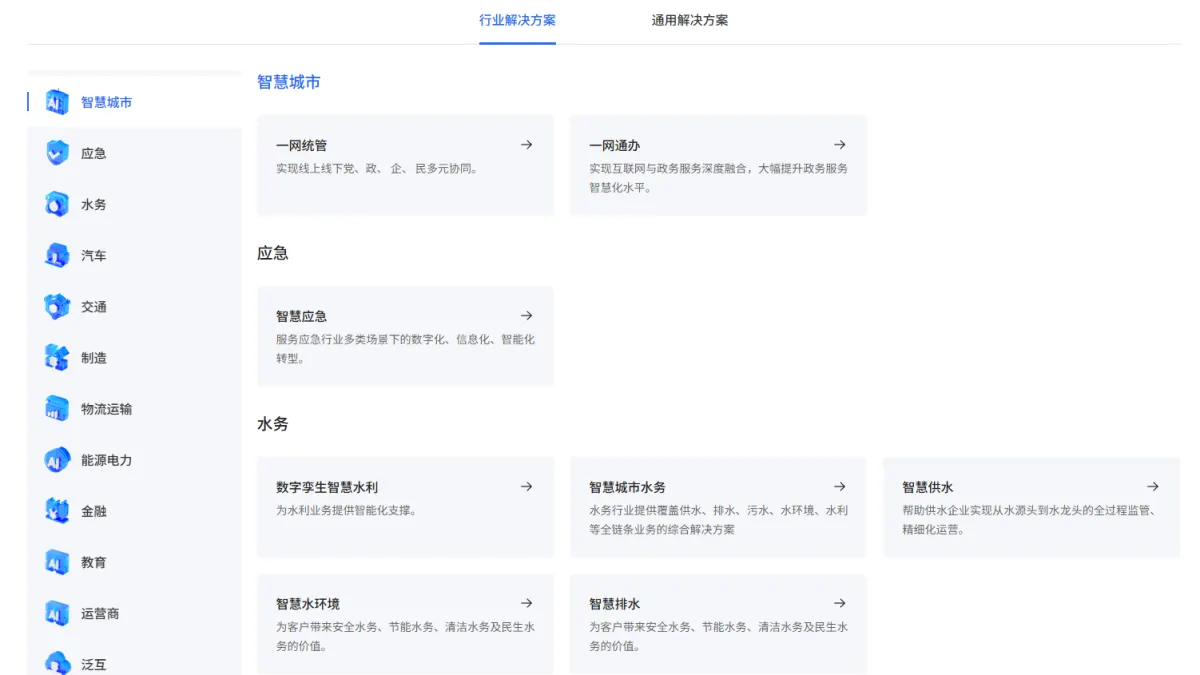
- Industry solutions: Baidu packages its AI for sectors such as finance, manufacturing, transport and city services.
Before you start, plan for three things. Account opening on Baidu AI Cloud goes through real-name verification, which is simpler with a Chinese business entity. Most consoles and documentation are in Chinese. And personal data collected in China falls under Chinese data protection rules, so where the data is processed matters. The most common project is not a new AI app but a connection between an AI service and existing business tools, such as a CRM that reads scanned contracts or a dashboard that summarizes customer feedback: that is the work of our CRM and business intelligence solutions.
How Baidu AI compares with other Chinese AI platforms
Baidu AI stands out for its breadth: search, speech, vision, driving and cloud under one company. Other Chinese platforms take a different angle. Tencent Hunyuan is built into Tencent products such as WeCom and Tencent Docs, and sold through Tencent Cloud. DeepSeek publishes open-weight models that companies can host themselves. Coze, from ByteDance, is a no-code builder for AI agents rather than a model.
How QPSoftware can help
QPSoftware has built websites, apps and business software in Shanghai since 2009. As a CRM and BI agency in China, we connect AI services such as Baidu’s APIs to the CRM, reporting and customer service tools your China team already uses, and keep the data flows compliant with local rules.
Frequently Asked Questions
Is Baidu AI available in English?
Partly. The ERNIE models understand and answer in English, and Baidu publishes English pages for investors, and PaddlePaddle has English documentation. The Baidu AI open platform, the Baidu AI Cloud console and most of the technical documentation are in Chinese, so a foreign team usually needs a Chinese-speaking developer or a local partner to set up an account and integrate the APIs.
Can a foreign company use Baidu AI APIs?
Yes, but the practical route is through a company registered in China. Baidu AI Cloud accounts go through real-name verification, and enterprise verification relies on Chinese business documents. A foreign company without a China entity can test the consumer products, but a production integration normally runs under its China subsidiary or a local partner’s account.
What is the difference between Baidu AI and ERNIE Bot?
Baidu AI is the whole set of Baidu’s AI technologies: language models, speech, vision, autonomous driving and the cloud services that sell them. ERNIE Bot is one consumer product built on top: a chatbot powered by Baidu’s Wenxin (ERNIE) large language models, launched in March 2023. Companies that want ERNIE in their own tools call the models through Baidu AI Cloud.