
Tianditu Map World (Map World, 天地图) is China’s official online map, the National Platform for Common GeoSpatial Information Services. Launched in 2010 by the national surveying and mapping administration, it brings together geographic data from surveying departments at every level. Companies use its APIs and data mainly for public-sector, planning and GIS projects.
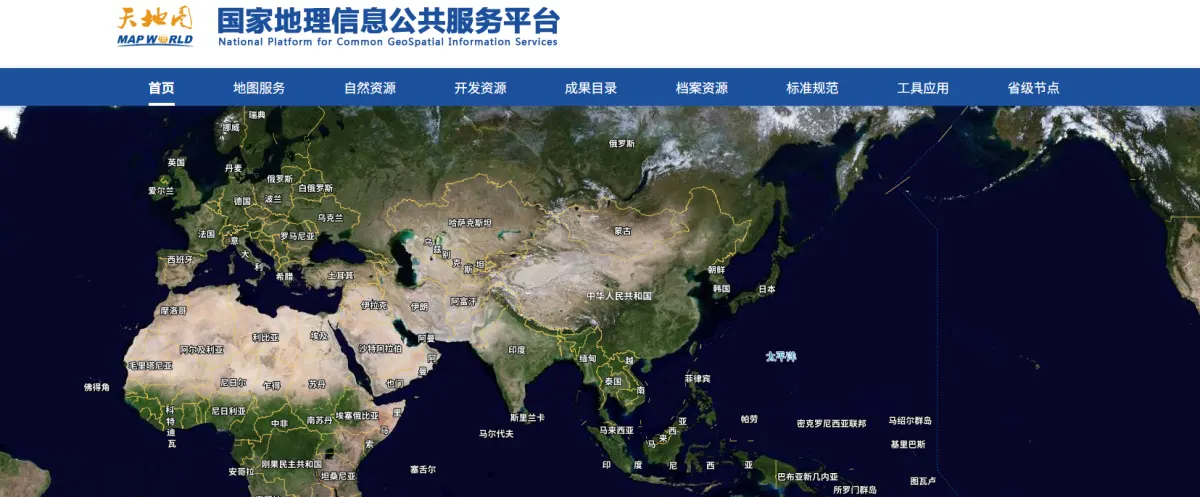
What Tianditu is, and why it exists
Before Tianditu, geographic data in China was scattered across departments, in formats that did not match and were hard to share. Tianditu was created to connect these sources in one platform, with national and provincial nodes. Its data comes from public surveying and mapping departments, with contributions from companies and institutions. This official character is what sets it apart from consumer map apps.
Data resources
- Basic geographic data: terrain, water systems and transport networks, including digital elevation models used as references for urban planning and water projects.
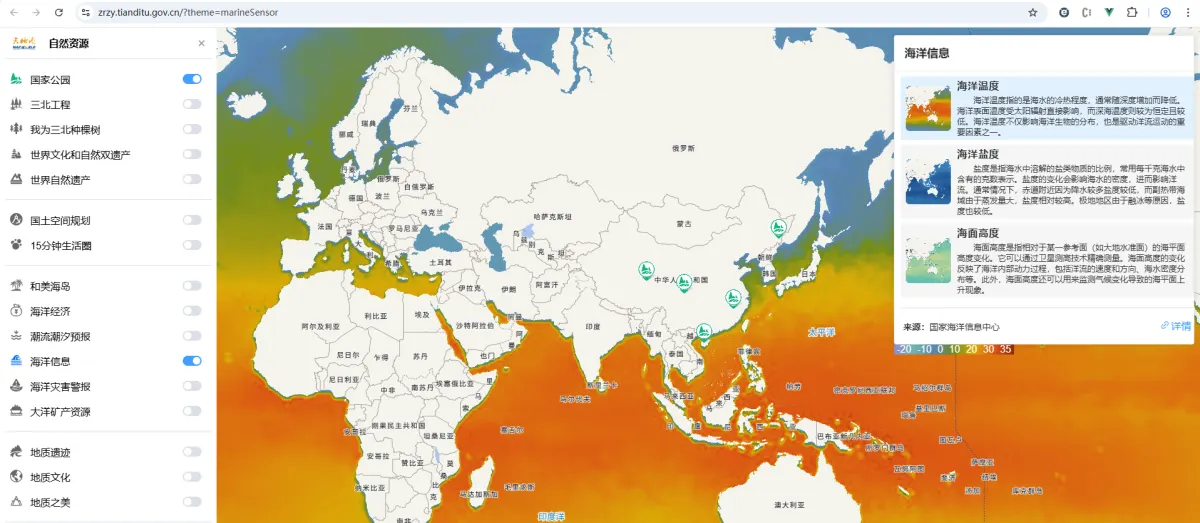
- Thematic data: population, economy, environment and natural resources, shown as thematic maps that help government departments, companies and the public read how a phenomenon is distributed.
- Real-time data: traffic and weather warnings, updated and displayed as they change.
Service functions
- Map browsing and search: users browse maps, search places, plan routes and measure distances on the web and on mobile.
- Geocoding and reverse geocoding: converting addresses into coordinates and back, used in logistics, delivery and location-based services.
- Spatial analysis: buffer, overlay and network analysis tools that extract value from geographic information for planning and business decisions.
How to integrate Tianditu
Integration methods
- Web service APIs for maps, geocoding and spatial analysis, so a website can show a map, search locations or display routes. A tourism website, for example, can show its sites and suggest itineraries.
- SDKs for iOS and Android, with offline map caching, gestures and location-based navigation in a mobile app.
- Desktop GIS integration with software such as ArcGIS and MapInfo, where planners call Tianditu data inside their usual tools for land use or transport studies.
What integration brings
- Lower development cost: no need to build and host your own geographic database.
- Authoritative data: Tianditu’s data is reviewed and updated by official surveying bodies, which matters for projects that must rely on state data.
- More use cases: thematic and natural resource layers that consumer maps do not offer.
If a mobile app needs a map, our team can help you choose between Tianditu and the consumer maps as part of mobile app development in Shanghai.
How Tianditu differs from Amap, Baidu Maps and Tencent Map
Tianditu is built for data and public services, not for daily navigation or local reviews. For a consumer-facing app or website, Amap, Baidu Maps and Tencent Map are usually the better fit, with richer place data and services. Tianditu is the right choice when official data, thematic layers or GIS analysis are the point of the project.
How QPSoftware can help
Choosing a map in China depends on your platform, your users and the data you need. Our Shanghai team compares the options with you, then builds the integration on the web, in a WeChat Mini Program or in a native app. To develop your mobile app with the right map for China, start with a short brief of your use case.
Frequently Asked Questions
Is Tianditu the same as Map World?
Yes. Tianditu (天地图) is the Chinese name of the platform, and Map World is its English name, shown in its logo. Its full English title is the National Platform for Common GeoSpatial Information Services, and its address is tianditu.gov.cn, a government domain.
Who runs Tianditu?
Tianditu was launched in 2010 under the National Administration of Surveying, Mapping and Geoinformation. It combines data from surveying and mapping departments at all levels, which is why it is considered China’s official online map rather than a commercial service like Amap or Baidu Maps.
Can a company use Tianditu in its own website or app?
Yes. Tianditu provides web service APIs, iOS and Android SDKs and connections to desktop GIS software. Developers register on the platform and request a key before calling its services. It suits projects that need official geographic data; consumer apps usually prefer Amap, Baidu Maps or Tencent Map for their place data.