5 Practices to Drive Traffic and Sales to Your China E-Commerce Store
Updated on |By QPSoftware
To drive traffic to your China e-commerce store, build private traffic on channels you control, such as a WeChat Mini Program, connect online and offline sales, sell through social commerce apps, work with Key Opinion Consumers (KOCs), and use short videos and live streaming. Together, these five practices bring shoppers to your store.
Key takeaways
- Private traffic, on channels such as a WeChat Mini Program or your own app, reduces your dependence on marketplaces like Tmall and JD.
- Omnichannel retail connects online promotion with offline purchase, and needs reliable order and stock management.
- Social commerce lets users complete a purchase without leaving WeChat, Xiaohongshu or Pinduoduo.
- KOCs, everyday consumers with small followings, share reviews that audiences perceive as more genuine than paid posts.
- Live streaming sells through flash sales, viral products, gifts with purchase and limited offers.
This article was written in 2020, a hard-to-forget year for the world economy. Never before had businesses across the world faced such enormous challenges and uncertainty about their future. The five practices below are the ones we recommended to online stores in China that year, and our e-commerce team in Shanghai builds the stores and tools they rely on.
The Chinese E-Commerce Market in 2020
China was not immune to the effects of the pandemic, but it recovered faster than expected, especially in e-commerce, which benefited to some extent from the COVID-19 epidemic. Growth in 2020 was lower than initially forecast, but the outlook remained favorable, and China was expected to become the largest retail market in the world by the end of that year.
Chinese consumers were expected to spend $2.090 trillion on retail e-commerce in 2020, a 16 percent increase over 2019. A considerable part of these transactions was expected to go through social e-commerce, as tools like WeChat Mini Programs kept growing in popularity: good reasons to invest in this industry and boost your e-commerce in China.
5 Best Practices to Drive Traffic to Your E-Commerce Store
What can help your e-commerce platform gain more visibility and generate more profit?
We will now discuss the five best practices that help your business thrive. You may already apply some of them, but they still need your attention.
Private Traffic
What Is Private Traffic?
Private traffic is the traffic a brand can manage itself, without relying on third parties or paid channels. For instance, a brand with a proprietary app or a WeChat Mini Program can use these channels to attract new users and stay connected with them. It does not need to rely only on external platforms like Tmall and JD, where it has no control over the traffic.
Private traffic became a hot topic among marketers in China looking for cost-effective ways to increase their consumer base.
From the summer of 2019, private traffic showed a positive trend, as more consumers were willing to join private traffic channels for the benefits that come with them. Brands can use these channels to engage with their customers, providing shopping assistants or KOLs to guide their buying decisions, and to build personal relationships with customers. Customers enjoy a more human and personal experience while shopping online, which benefits your business too.
How to Create Your Private Traffic
Creating your private traffic takes a savvy use of digital and web solutions, coupled with a powerful marketing strategy. You may develop your mobile app to support your online shop or, specifically in China, invest in WeChat Mini Program development. WeChat is an effective way to stay in touch with your customers and create a personal experience. Use these social media platforms and other digital tools to distribute relevant and engaging messages that redirect traffic to your e-commerce platform. If your customers feel connected and your marketing strategy resonates with your audience, they will share your message and generate direct traffic.
WeChat is very useful for generating private traffic for cross-border e-commerce. Ma France is a case in point: QPSoftware developed a cross-border WeChat Mini Program for them, in addition to their WeChat Official Account. Linked to the Official Account, the Mini Program lets Ma France send discounts to its followers, and its WeChat Pay integration makes purchasing easier and faster.
Omnichannel Retail and Online to Offline (O2O)
Omnichannel retail is not a new concept, but it remains an important way to boost your e-commerce platform. During the COVID-19 pandemic, companies with a strong omnichannel structure were able to meet the needs of their customers.

What Is O2O Retail?
Online to offline (O2O) retail is a business model in which online and offline channels work closely together to acquire more customers, meet their needs and boost sales. Online channels promote products, services and offers, which lead customers to visit the brick-and-mortar store and finalize the purchase there. Typical examples are coupons received by email or on social media that customers redeem at the store checkout.
Having customers visit the shop instead of closing the sale online may seem outdated, but it still appeals to a large audience. For instance, according to research by Gartner, 82 percent of luxury consumers in China preferred a combination of online and offline channels to make purchases, a good indicator that an omnichannel strategy was still valuable.
It was not by chance that companies like Alibaba and JD were opening stores all across China in 2020. These new-generation shops offer an experience as close as possible to online shopping: customers can scan products with a smartphone, get detailed information, receive suggestions for alternative items, and so on. Their success showed that part of consumers still feel more confident when they can combine digital and traditional shopping.
How to Build Your Omnichannel Strategy
Building omnichannel retail takes proper planning and organization. Take full advantage of mobile apps, social media, push messages, proximity services and any other tool that helps spread your message. WeChat Mini Programs, for instance, are especially successful for branding, brand awareness, marketing and loyalty. An efficient CRM, such as one built through custom CRM development, keeps you in continuous communication with your customer base.
Your order management system must be trustworthy and reliable. Once customers visit your store to buy an item or pick up an order, their experience must be as smooth as possible, or your marketing efforts are wasted. For instance, your e-commerce platform, WeChat Mini Program or any other channel must always be coordinated with your warehouse, through third-party integration (ERP, CRM, logistics), to return real-time product availability and make sure products are ready when the customer arrives.
Social Commerce and Social Shopping
Social commerce must not be confused with social media marketing. Social media marketing promotes a product or service and redirects the user to a website or an online store. Social commerce lets the user complete an order and check out directly on the platform they are using.
In 2020, social commerce in China was forecast to reach $242.41 billion, representing 11.6 percent of total retail e-commerce sales. Studies at the time expected these figures to double by the end of 2023. These were massive numbers, and an excellent opportunity to boost your e-commerce through this channel.

What Social Apps Can You Use for E-Commerce in China?
In 2020, three apps worked well for social commerce in China: WeChat, Xiaohongshu and Pinduoduo.
WeChat is the most popular social media platform in China. It is versatile for your marketing operations and for selling online. Although you can open a WeChat store for your brand, WeChat Mini Programs became more popular and are widely used to sell online.
Xiaohongshu is an e-commerce platform that stands out for its robust social features. For instance, it lets users share content with their fans and interact directly with them. As a brand, growing your fan base there can be challenging unless you work with influencers (KOLs or KOCs). Used properly, the platform can make your content go viral or spread by word of mouth.
Pinduoduo was the youngest of the three, but the public had already received it favorably. It boosts group purchases, offering attractive discounts based on the quantity of products bought online. The platform attracts users with promotions they can access simply by opening the app, inviting other users or sharing links.
KOC Marketing
You may be familiar with Key Opinion Leaders (KOLs), but the concept of Key Opinion Consumers (KOCs) may still be new to you.
KOLs have played a major role for years in promoting brands and boosting traffic for businesses willing to pay for their services. By 2020, however, KOLs had become a very costly marketing channel that small businesses often could not afford, which led to a surge in KOC marketing.
KOCs are everyday consumers with a network of followers (usually not very large) with whom they mainly share product reviews. From a marketing point of view, a KOC with just a few hundred followers may seem irrelevant. With many of them in your network, however, you can create a very active marketing channel, strengthened by the fact that their reviews are perceived as more genuine, because the brand does not necessarily pay for them.
A case in point is the brand Perfect Diary. The company was one of the first to understand the underlying value of KOCs. Leveraging the popularity of its virtual personal assistant, Xiao Wanzi, it created a network of hundreds of WeChat groups where customers communicate, share experiences and offer suggestions to each other. Together, these everyday users became a massive marketing machine that boosted Perfect Diary’s popularity and performance.
How to Attract KOCs
One way to attract KOCs is to gift products. Select the KOCs with the highest potential, send them samples of your products and ask them to post a review. Over time, you may establish a continuous collaboration with those who bring the most value to your brand.
Another efficient technique is to make the best use of your WeChat ecosystem. For instance, you can add a blog to your WeChat Mini Program. Your customers use this blog to express their opinions, offer insights and share content. Your role is to keep the blog alive, continuously offering input that starts new conversations. In this way, you give a voice to your audience, and they work for you by increasing your brand awareness and helping you close more sales.
Short Video and Live Streaming
Videos have been a critical marketing tool for many years, and short videos that are engaging and straight to the point remain attention magnets. In 2020, the trend was also to use live-streaming events to engage the public.
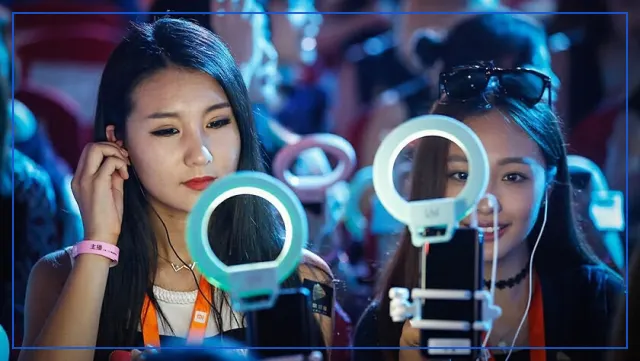
Live streaming works like a live TV show. Unlike pre-recorded videos, live videos take place in real time and can be private or public. Hundreds or even thousands of people can watch, interact and comment live. Thanks to the popularity of reality TV, live streaming tends to attract a vast audience, offering unprecedented opportunities to spread your marketing message.
In 2020, videos were still the main format luxury brands used to promote products. Since 2019, however, live-streaming events had gained tremendous popularity, pushing more KOLs to use this channel to influence their audience. In October 2019, the live streamer Viya set a record of 353 million RMB in sales in a single day, and companies were investing more in live-stream events as KOLs raced to become the next Viya.
How to Use Live Streaming for Your E-Commerce Store
For live-streaming events to produce results, consider a few things. First, partner with a KOL who is popular and relevant to your brand or products. Second, set the goal of the live event. There are four main types of promotions you can use.
Flash sale: you use the live event to offer products with significant discounts. You will not make a profit during these events, and they may even cause a loss. However, they are an effective way to attract an audience and encourage it to follow future events, especially when you use these channels for the first time.
Viral products: the purpose is to present cost-effective, good-looking products with the potential to go viral. During the event, the vlogger promotes the products, possibly with careful comparisons to similar products from your competitors. The KOL needs to be closely connected to the products advertised.
Gift with purchase: you offer a gift or a series of gifts as a reward for buying your products. If the gifts appeal to your audience, they are a good incentive to close the purchase.
Limited offer: this type of sale uses scarcity. The products presented during the live-streaming event can be bought at a discount, but only for a limited time, or only a limited number of items is available at the special price. This approach is usually very effective, since it pushes buyers to act quickly for fear of missing a unique opportunity.
Which Platforms Can You Use for Your Videos?
Several options were available in 2020 to broadcast your videos or live-stream events.
Xiaohongshu
This platform is especially good for a female audience, since it mainly focuses on beauty products, fashion outfits and lifestyles. Besides featuring videos, the platform supported live streaming.
WeChat is often compared to Facebook in the Western world, and in 2020 it counted over 1 billion daily users. It let Official Accounts and some KOLs host live events, and had introduced a new section called Channels to broadcast short videos.
In 2020, Weibo had over 500 million monthly active users and was not new to videos: it had hosted live-streaming events since 2016. It later took over the live-streaming platform Yizhibo and linked the two platforms, giving their videos even larger exposure.
Taobao
Taobao is renowned as the leading e-commerce platform in China. To increase sales, Taobao turned to live-streaming events, which proved particularly effective in boosting sales. Understand what products customers are looking for, and organize your live event to make your products visible.
What Should You Do Next?
Despite the challenges of 2020, e-commerce in China kept flourishing. Foreign businesses can access the local market and address an audience with growing spending power that responds strongly to marketing messages.
Start with one practice and measure its results before adding the next: private traffic on WeChat, social commerce, KOCs or live streaming. To place these practices in context, read our look back at China e-commerce trends in 2019 and our strategies to attract Chinese buyers.
Trending marketing techniques play a critical role in boosting your online shop, and so do the digital tools and web solutions behind them. Working with an e-commerce agency in China that knows the local digital environment and buyers’ psychology gives you the advantage you need to succeed.
Frequently Asked Questions
How do you drive traffic to a China e-commerce store?
Combine channels you control with the platforms where Chinese shoppers spend their time. Build private traffic with a WeChat Mini Program or your own app, connect online promotions to offline stores, sell through social commerce apps such as WeChat, Xiaohongshu and Pinduoduo, work with KOCs whose reviews feel genuine, and use short videos and live streaming to present your products.
What is private traffic in China?
Private traffic is the audience a brand reaches through channels it manages itself, such as a WeChat Mini Program, a WeChat Official Account or a proprietary app, instead of relying on marketplaces like Tmall and JD or on paid channels. Brands use it to engage customers directly, offer personal shopping advice, and build loyalty without paying for every visit.
What is the difference between a KOL and a KOC?
A Key Opinion Leader (KOL) is an influencer with a large following, paid to promote brands, and has become a costly channel. A Key Opinion Consumer (KOC) is an everyday consumer with a small network of followers who shares product reviews. Audiences often perceive KOC reviews as more genuine, and many KOCs together can form a very active marketing channel.