
B2B Marketing in China: 5 Essential Tools to Reach Business Buyers
Updated on |By QPSoftware
B2B marketing in China works through five essential tools: a website localized and fast in China, Baidu SEO, expert answers on Zhihu, a WeChat Official Account, and video on platforms such as Bilibili and Douyin. Google is blocked in mainland China, so business buyers research suppliers on these Chinese channels instead.
Key takeaways
- Localize your website for Chinese business buyers, and host it in mainland China with an ICP filing, or as close as possible.
- Baidu is the search engine to rank on: write in simplified Chinese and publish original content.
- Zhihu lets B2B companies show their expertise by answering real questions.
- A WeChat Official Account keeps the relationship going with content, QR codes, live streams and Mini Programs.
- Video on Bilibili, Douyin and Youku supports product explanations, webinars and launches.
The B2B Chinese market is vast and lucrative and offers countless opportunities to foreign companies. However, it is a challenging market that demands insight into its unique needs and a well-planned B2B marketing strategy.
Chinese businesses and professionals are looking for technologies and solutions to solve their problems and improve their efficiency.
Yet just opening a website targeting a Chinese audience is not enough to be noticed by potential partners and find China’s business opportunities. This challenging market will be profitable only if you approach it with the right mindset and the proper channels.
Let’s examine the essential B2B marketing tools in China that you should implement to extend your market reach.
1. Localize Your Website for China
For your website to succeed in China, it must feature content in the local language. Even though Chinese companies have English-speaking staff, featuring content in Chinese will give you an advantage since it will cater to their preferences.
However, to efficiently localize your website, simply translating your content may not be enough. You must adapt your language to your potential customers in China. Therefore, identify your audience and rearrange your content accordingly. For instance, besides presenting your products or services, you may need to add extra content to educate your audience about them and use technical language familiar in China.
Moreover, several technical and design issues play a crucial role in your website’s success.
For instance, because of the complexity of the Chinese language and local audience preferences, your website will seldom have the same structure as in the western market. The navigation layout, how the content is presented, and even the color pattern must be restructured to meet local preferences. Our Chinese website localization services combine translation by local translators with the technical changes Chinese users need, such as hosting, fonts, maps and payments.
Localization also covers speed and access. Traffic that crosses China’s border is filtered, which slows down websites hosted abroad, so the best option is to host your website in mainland China.
However, to host your website in mainland China, you need an ICP filing, which requires a company registered in China. If you do not have a company in China at this stage, the next best option is to host your website in Hong Kong. It will load more slowly in mainland China than a website hosted there, but still faster than a website hosted in Europe or America. Baidu also warned, in October 2017, that Chinese-language websites hosted on servers abroad could have display problems in its search results. To make your website work in China, our consultants check hosting, filings and blocked resources before launch.
2. Baidu SEO
Google is blocked in mainland China, and the dominant search engine in the country is Baidu. Therefore, your SEO strategy must follow Baidu’s guidelines. Even though there are some similarities between Google and Baidu and your SEO knowledge is still valuable, there are substantial differences you must consider if you want your website to rank well.
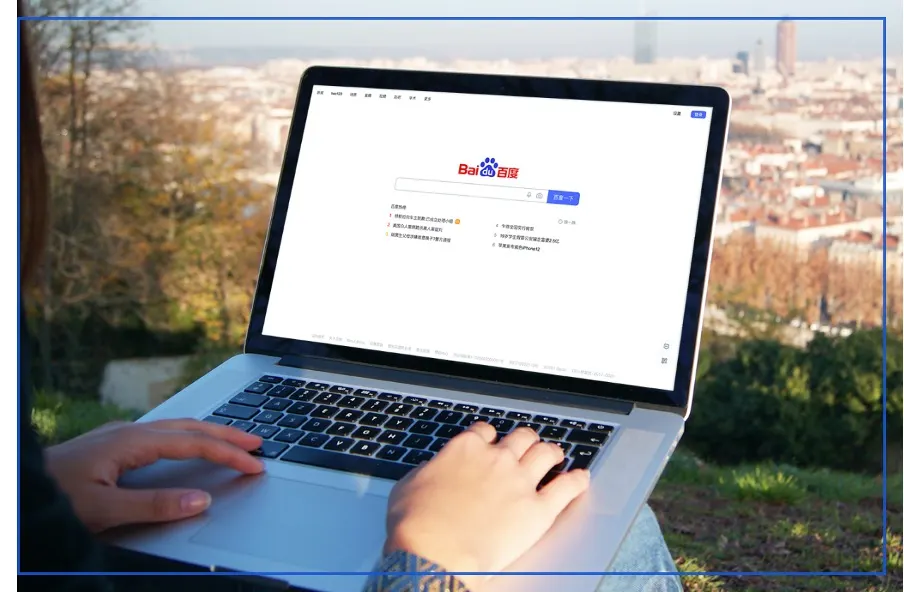
We already mentioned the importance of having your content translated into Chinese. From an SEO perspective, it is recommended to translate your content into simplified Chinese, as this is Baidu’s preferred language. Hosting matters too, as Baidu’s warning about websites hosted abroad shows.
Concerning the content, quality and relevance are favored by Baidu. As with Google, you can use keywords naturally inserted into the text to identify your pages’ topic clearly. Baidu also rewards fresh, original content: its Hurricane algorithm, announced in July 2017, removes pages built on scraped content from its index and gives more visibility to high-quality original content. Therefore, you must set a publishing strategy to provide new content regularly while not overlooking quality.
A word of caution about the content: never publish anything censored in China. Such content would generate penalties on Baidu. Moreover, as you plan your backlink strategy, which is another important ranking factor, make sure you do not have links pointing to or coming from censored websites. Such links may lead to penalties as well.
To boost your website’s rank in China, read our full guide on Baidu SEO strategies, or see our China SEO services for Baidu and Google.
3. Zhihu
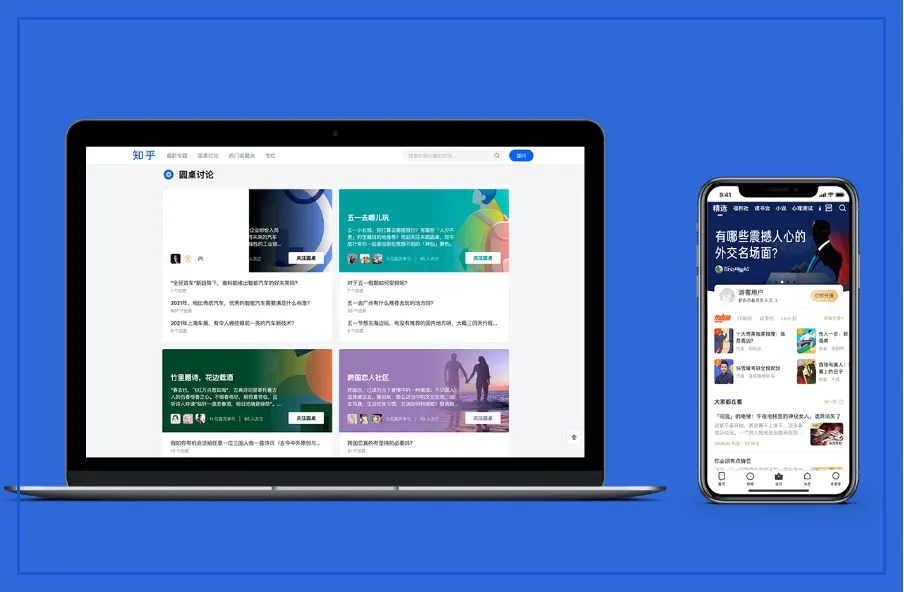
Many foreign companies are not familiar with Zhihu, but this platform is critical for your B2B marketing strategy in China. You may think of Zhihu as a mix between Quora and LinkedIn.
Zhihu describes itself as a leading online content community where people come to find solutions and make decisions, which is what business buyers do before they contact a supplier. It has become a place where professionals and businesses get to know each other. You can use Zhihu to increase your business’s exposure, establish it as an expert in the market, improve your branding, and ultimately convert leads into real sales.
You can use the platform for your marketing strategy in different ways.
Q&A and Discussion
The most obvious way is to look for specific questions related to your products or niche and provide the answer. This is a straightforward way to expose your brand and showcase your expertise.
Alternatively, you can also start new discussions on a specific topic. As you generate interest and prompt exchange of views, you can join the debate by offering your tips, providing answers, and in the end, promoting your products or services.
Write Valuable Content
Whatever content you post on the platform, you need to keep in mind a few things. Zhihu is used by real businesses that are looking for answers to real problems. Therefore, your content must address these needs. Otherwise, it will not resonate with the audience.
The way you write your content will have an impact on your branding. Your topics and writing must clearly show that you are an expert in the field and provide a solution. Your primary goal is to answer questions and add value to your readers even before sending a brand message.
Such high-quality and targeted content can generate leads and, in time, sales for your business. Content published on Zhihu can also rank well on search engines, which adds to your SEO.
Live Streams
Zhihu also lets you host live events on the platform. You can use it to organize webinars, meetups, or other live presentations for a professional audience.
Paid Ads
Paying to have your ad displayed on Zhihu is another simple way to do B2B marketing. As we already mentioned, many professionals use the platform. Having your banner ad displayed on its pages can be an easy way to get in touch with the right facilitator for your business.
4. WeChat for B2B Marketing
It is not possible to do business in China without a WeChat account. In particular, for B2B marketing, you need to have an official WeChat account.
Weixin and WeChat had 1.439 billion monthly active users in June 2026, according to Tencent, which makes the app a critical tool to establish and maintain business relationships in China. It features several tools that are especially effective for your marketing strategy.
For instance, you can use QR codes to feature your catalog and promotions, invite your partners to offline events, and more. Brochures, sales presentations and event posters carry those QR codes, so plan them together with your marketing collateral design. On your WeChat account, you can also publish content that your business partners may find helpful, so that you keep them engaged.
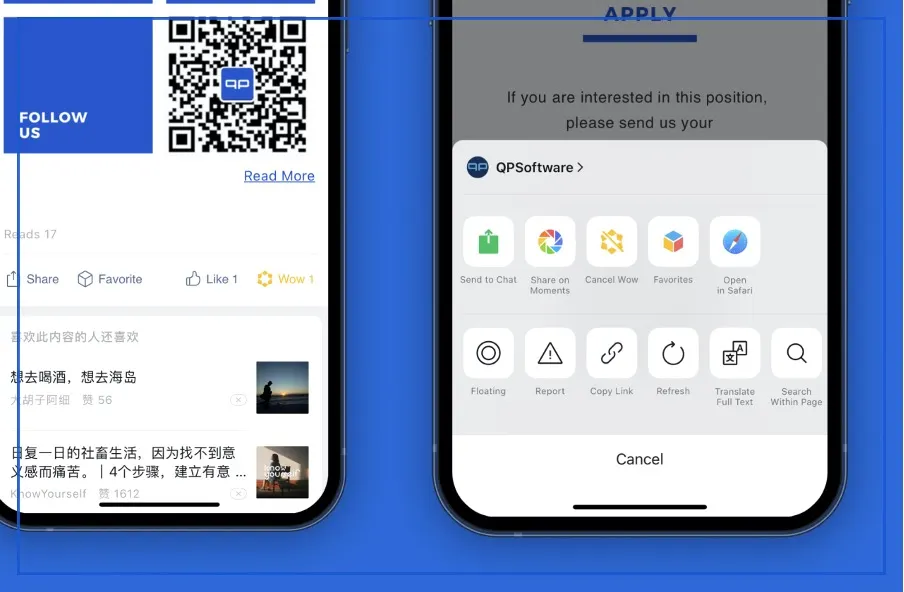
Our own WeChat Official Account: the article ends with a QR code to follow us, and readers can send it to a chat or share it on Moments.
A feature worth exploring is WeChat live streaming, which works well for interactive B2B marketing campaigns. Live streams support comments and likes, and viewers can share the link to the live event on WeChat Moments, which increases reach and brings new traffic.
Not to be overlooked are WeChat Moments ads and WeChat Channels. Advertising on WeChat Moments allows you to place paid ads in WeChat users’ Moments feed, similar to what you can do on Facebook. WeChat Channels lets you create short-form videos or longer brand content to distribute to a wider public audience beyond your existing followers.
You can also use this platform to offer support to your customers. For instance, using a WeChat Mini Program, you can interact with your customers, offer assistance, and answer their questions, including in real time.
WeChat is well worth your attention: for B2B marketing in China, its value is crucial. As a WeChat agency in Shanghai, we build the Mini Programs and H5 pages that B2B companies use to present their products and serve their partners.
5. Chinese Video Platforms (Youku, Bilibili, Douyin)
Video marketing is essential for reaching Chinese business audiences. Youku remains a significant platform for long-form brand content, comparable to YouTube in the western world. Chinese video platforms have also diversified: Bilibili attracts a young and highly engaged audience, including technology enthusiasts, while Douyin, the Chinese version of TikTok, is the leading short-video platform. Our guide to video marketing in China compares these platforms in detail.
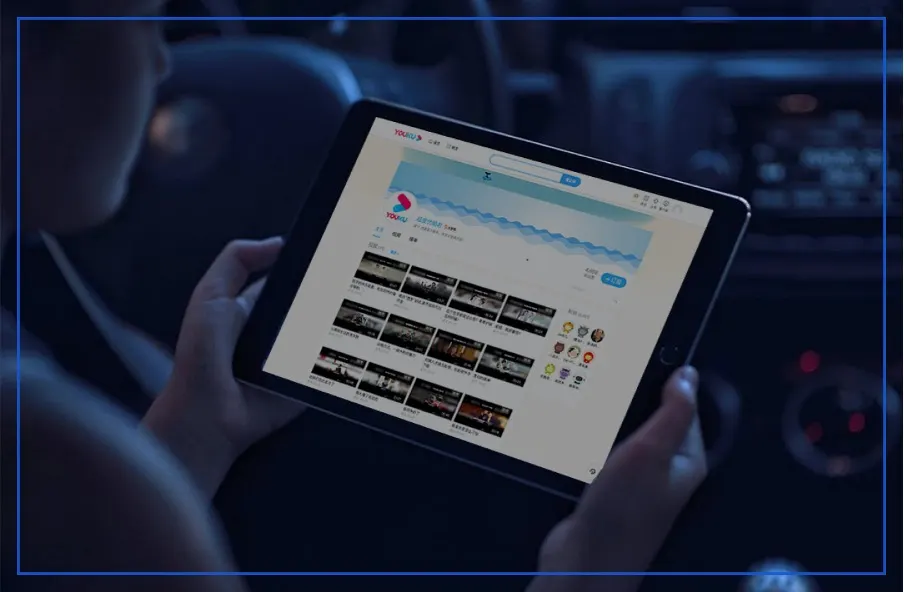
From a business perspective, video platforms are powerful tools for B2B video marketing in China. On Youku, you can open an official brand channel and post long-form content, whether a short marketing message or an in-depth product explanation. Official brand accounts can even add an online store, allowing you to close sales directly from the platform.
For advertising, these platforms follow a model similar to YouTube: you can pay for pre-roll or banner ads while users watch videos, with precise audience targeting to maximize ROI. Bilibili is particularly effective if your B2B audience includes technology, engineering, or innovation sectors, as it attracts a highly engaged community. Douyin, meanwhile, offers massive reach for shorter, high-impact campaigns.
All major platforms support live-stream events. Whether you want to launch a new product, host a webinar, or run an interactive demo, live streaming is an effective way to connect with a large number of potential business partners across China in real time.
What Should You Do Next?
You have been introduced to the five most essential B2B marketing tools in China. As you may have noticed, some technicalities are very similar to what you are used to in the western world.
Nevertheless, any successful B2B marketing campaign in China must take into account not only the technicalities but, most importantly, the local culture. Everything must be crafted around the specific needs of this unique market. A successful B2B marketing campaign in China needs good planning, deep insight into the local market, and most likely help from local professionals.
Start with the assets every other channel leads to: a localized website that loads in China and a WeChat Official Account. Then add Baidu SEO, Zhihu answers and video as your budget allows. Our WeChat agency can build the WeChat side of that plan, and our overview of digital marketing in China shows how the other channels have evolved since 2021.
Frequently Asked Questions
How do you do B2B marketing in China?
Start with a website in simplified Chinese that loads fast in China, then make it visible on Baidu, since Google is blocked in mainland China. Build trust with expert answers on Zhihu and a WeChat Official Account that keeps partners informed, and use video and live streams on Bilibili, Douyin or WeChat Channels for product explanations, webinars and launches.
What are the best marketing channels in China for B2B companies?
The core B2B marketing channels in China are Baidu for search, WeChat for relationships and customer service, and Zhihu for expertise. Video platforms such as Bilibili and Youku support long-form product content, and WeChat Moments ads or Baidu paid search add reach. The right mix depends on your industry, your buyers and whether you already have a Chinese entity.
Is WeChat used for B2B marketing in China?
Yes. Doing business in China without a WeChat account is hardly possible. B2B companies use an Official Account to publish expert content, QR codes to invite partners to events, live streams for webinars, Moments ads for reach, and Mini Programs for product catalogs and customer support.
Do you need to host your website in China for B2B marketing?
It helps, but it is not always possible. Hosting in mainland China gives the best speed and requires an ICP filing, which needs a company registered in China. Without one, hosting in Hong Kong is the next best option. Baidu has warned that Chinese-language websites hosted on servers abroad can have display problems in its search results.