
Scrum Project Management: How the Scrum Approach Works
Updated on |By QPSoftware
Scrum project management runs a project with Scrum, a lightweight agile framework, in short cycles called sprints of one month or less. A small, self-managing team, typically 10 or fewer people with a Scrum Master, a Product Owner and Developers, delivers a usable increment at the end of each sprint, then inspects it and adapts the plan.
Key takeaways
- Scrum is a lightweight framework for complex work, first presented by Ken Schwaber and Jeff Sutherland in 1995. Its official rules are in the Scrum Guide.
- Work runs in sprints of one month or less, and each sprint ends with a usable increment.
- One Scrum Team: a Scrum Master, a Product Owner and Developers, typically 10 or fewer people, with no hierarchy.
- The Product Owner manages the product backlog, the Scrum Master removes impediments, and the Developers build the increment.
- QPSoftware uses Scrum on web, e-commerce, SEO, business intelligence and app projects, with a Certified ScrumMaster in its team.
If you are familiar with rugby, you know what a scrum is. If not, picture this: players tightly interlock arms and heads, then push forward at full power to win the ball from the other team. This is not a rugby lesson, but if you can picture a scrum, it is easier to understand how the Scrum approach to project management works.

Scrum is not new: Ken Schwaber and Jeff Sutherland first co-presented it at the OOPSLA conference in 1995. It is used to approach complex work, especially in the tech field, and it belongs to the broader agile approach to project management. Tackling a project with Scrum helps teams work smarter and get better results: it improves the quality of the final product and saves both time and money.
What Is Scrum in Project Management?
The Scrum Guide, written by the creators of Scrum, presents it as a lightweight framework that helps people and organizations solve complex problems in an adaptive way. Scrum is not a full process: the guide describes it as purposefully incomplete, a framework that supports the agile way of working.
Since this can get confusing, let’s go back to rugby. When a team plays a match, it has an overall strategy to win: that strategy is the agile methodology. The scrum is one of the means the team uses to reach its goal.
When a team adopts Scrum for custom website development or an e-commerce project, its members merge forces to achieve a common goal. As in a rugby scrum, they no longer work individually: they become one unit, where each person’s skills and expertise combine for maximum efficiency.
How Does the Scrum Approach Work?
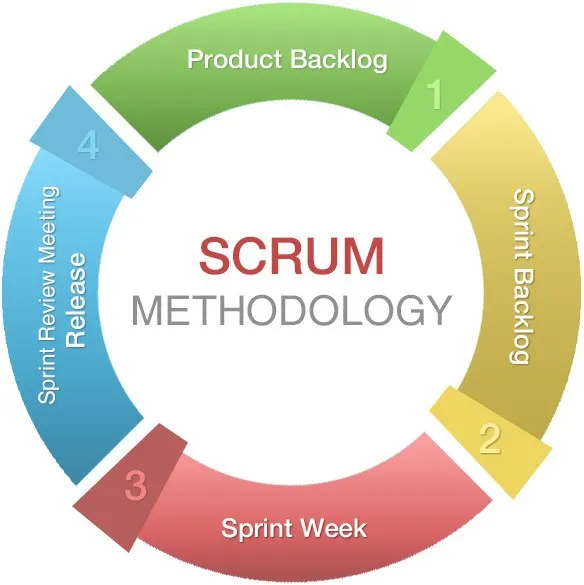
What makes this approach different is that no team leader gives directions to each member or oversees their performance. Team members do not receive a detailed list of how to do each task. Each member knows the final goal, and the team decides the best way to reach it. According to the Scrum Guide, a Scrum Team is self-managing and cross-functional, with no sub-teams or hierarchies.
Self-managing means the team itself decides who does what, how, and what to work on. Thanks to their expertise, members know the best way to solve the issues of their field. Cross-functional means the team has all the skills needed to create value in each sprint: every member is involved and needed to turn an idea into a product.
This creates an environment where brainstorming thrives and personal abilities combine for better results.
The work is organized into a series of sprints so that the project flows smoothly. Sprints are fixed-length events of one month or less, and a new sprint starts as soon as the previous one ends. Each sprint begins with Sprint Planning, includes a 15-minute Daily Scrum for the Developers, and ends with a Sprint Review and a Sprint Retrospective. At the end of each sprint, the team delivers a usable increment, so it can test its work and discuss the results.
For instance, in a web design project, the increment delivered at the end of a sprint can be a demo of the features the team has built. It is not the final product, and it does not need every design element in place. But it must be usable, so the team can test the overall quality of the product and discuss adjustments.
Dividing the project into sprints gives the client regular moments to check that the product meets their requests, and to ask for adjustments.
The concept is simple, but running Scrum well takes training and practice. Good organization is pivotal, and everyone must understand the three accountabilities of a Scrum Team.
Scrum Roles: Scrum Master, Product Owner and Developers
A Scrum Team consists of one Scrum Master, one Product Owner and Developers. Since its 2020 edition, the Scrum Guide calls these roles accountabilities.
The Scrum Master
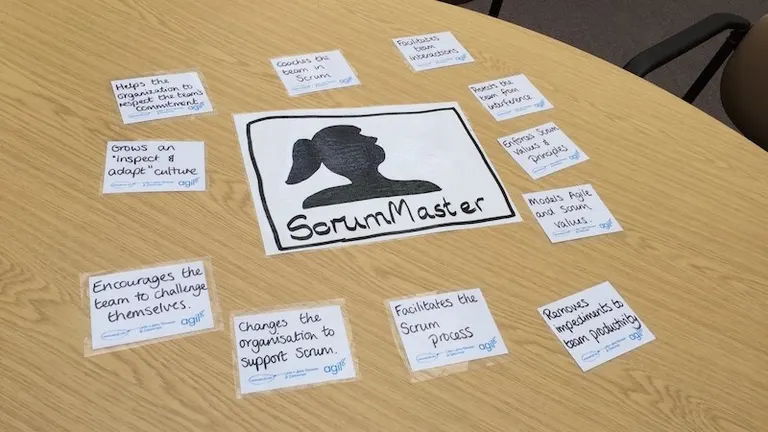
The Scrum Master plays a key role in the success of the project: they make sure the team works in the right direction and that everyone is on the same page. The Scrum Master does not assign tasks or give instructions to individual team members, since the team takes care of that.
The Scrum Master serves the team and makes sure the obstacles it faces during a sprint are removed, so deadlines can be met. Most importantly, the Scrum Master makes sure the team sets achievable goals for each sprint, to avoid over-commitment that could compromise the overall quality of the project.
The Product Owner
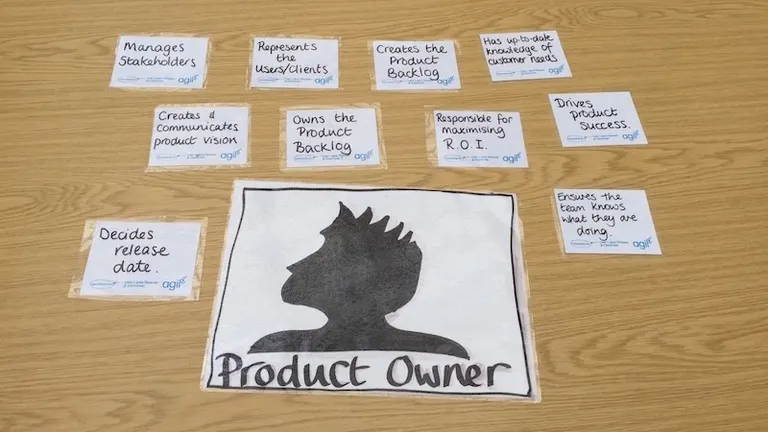
The Product Owner is accountable for managing the product backlog: a comprehensive, ordered to-do list that tells the team what to work on and what result to expect. The Product Owner also defines and communicates the product goal. At the end of each sprint, the Sprint Review inspects the outcome of the sprint and decides the next adaptations.
The Developers
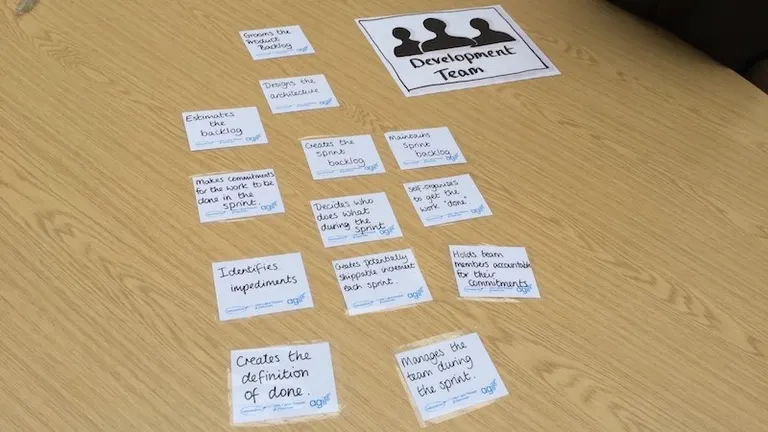
The Developers are the professionals who build the product. Earlier editions of the Scrum Guide spoke of a Development Team; the 2020 edition speaks of Developers within a single Scrum Team. They create the plan for each sprint, the sprint backlog, instill quality through a Definition of Done, and hold each other accountable as professionals.
A Scrum Team is small: the Scrum Guide puts its typical size at 10 or fewer people. Because their skills are tightly intertwined during the project, team members develop a strong team spirit that encourages creativity and efficiency.
What Are the Benefits of Scrum Project Management?

Here at QPSoftware, we use Scrum on a regular basis as part of our agile project methodology, and we have direct experience of its benefits. Our Scrum Master is a Certified ScrumMaster (CSM) from Scrum Alliance, which helps keep the process efficient and effective.
Even though Scrum is often applied to web design and e-commerce projects, it works in many other contexts. We also use it on projects run by our China SEO team, on CRM and business intelligence solutions, on WeChat apps built by our WeChat agency, and on native apps.
The idea behind Scrum project management is to deliver a product that is exactly what the client wants. With this approach, you never proudly present a product to your client only to get a thumbs down in return.
Here are some of the benefits we have experienced ourselves:
- Scrum saves time and money. This is one of the most important benefits. Because the project is divided into sprints, you control it at every step. At the end of each sprint, we present a demo to the client and collect their feedback. Adjustments are easy to make, and we avoid spending time on features the client is not happy with. In the end, the client gets what they want, and the project stays on time and on budget.
- Team members build camaraderie. This team spirit encourages creativity and efficiency. Even challenging projects become easier when the team is united and works toward the same goal.
- Projects move ahead quickly. The Developers meet every day for a 15-minute Daily Scrum to inspect progress toward the sprint goal. Progress is visible to everybody, and mistakes are corrected quickly, without wasting time or money.
- Everyone stays accountable. The daily meeting makes each member’s contribution visible, which keeps the team motivated and helps deliver projects on time.
- Clients are happier with the product. Scrum produces higher-quality products that meet the customer’s expectations. Combined with lower management costs for the company, it is a win-win situation.
Why QPSoftware Adopted Scrum
This article was first written in April 2018 by Ahmed, then CTO of QPSoftware. A certified Scrum Master, he had been with the company for more than three years and led the adoption of Scrum at QPSoftware. Here is how he described the beginning:
“I began to hear about the Scrum methodology on different blogs that I follow to stay up to date with the latest technologies and solutions available in my field. I saw more and more articles and posts about this methodology, and I started to get curious about it. I did some research and step by step I collected enough information to be able to apply it to our projects. I had to implement some Scrum techniques at QPSoftware, but I could not use this methodology entirely. That is why I followed specific training to be fully aware and competent. I decided to use this methodology because it is an exciting and brilliant methodology to use when working on digital projects. Since these projects require constant evolution, Scrum allows us to solve this issue efficiently. For instance, often clients change their mind as the project develops and thanks to Scrum we can consider this even before starting a project. This methodology helps us to manage our teams with high efficiency. It helps our teams to achieve the best while being happy and involved.”
What Should You Do Next?
QPSoftware uses Scrum as an integral part of its agile methodology. We have used it for years, and it has improved the quality of our web design and e-commerce projects. Take a look at our portfolio to see the kind of results we have achieved with it.
The same approach has worked well on business intelligence and SEO projects: Scrum helps us identify our clients’ needs clearly and adjust our workflow to get the best results. For WeChat app projects and native app projects, it helps us make sure the solution is user-friendly and meets users’ expectations.
Scrum works best with the right tools: see our selection of project management tools and techniques. If your next website needs a team that works this way, our web development company in Shanghai can run your project in sprints. To see how Scrum can work for your project, get in touch with us today.
Frequently Asked Questions
What is Scrum in project management?
Scrum is a lightweight agile framework for managing complex projects. The work is split into sprints of one month or less, and each sprint ends with a usable increment that the team inspects before adapting the plan. A small, self-managing Scrum Team, with a Scrum Master, a Product Owner and Developers, organizes the work itself.
What are the three roles in Scrum?
A Scrum Team has three accountabilities. The Product Owner manages the product backlog and communicates the product goal. The Scrum Master serves the team and makes sure impediments to its progress are removed. The Developers plan each sprint, build the increment and instill quality through a Definition of Done. The team typically counts 10 or fewer people, with no hierarchy.
How long is a sprint in Scrum?
A sprint is a fixed-length event of one month or less, which gives the team a consistent rhythm. A new sprint starts as soon as the previous one ends. Each sprint begins with Sprint Planning, includes a 15-minute Daily Scrum for the Developers, and ends with a Sprint Review and a Sprint Retrospective.