
Feishu (飞书) is ByteDance’s all-in-one workplace suite: messaging, calendar, online documents, cloud storage, video meetings and approvals in one app. Outside mainland China, ByteDance offers it under the name Lark. Chinese technology and creative companies use it heavily, and foreign teams meet it when working with them.
What Feishu does
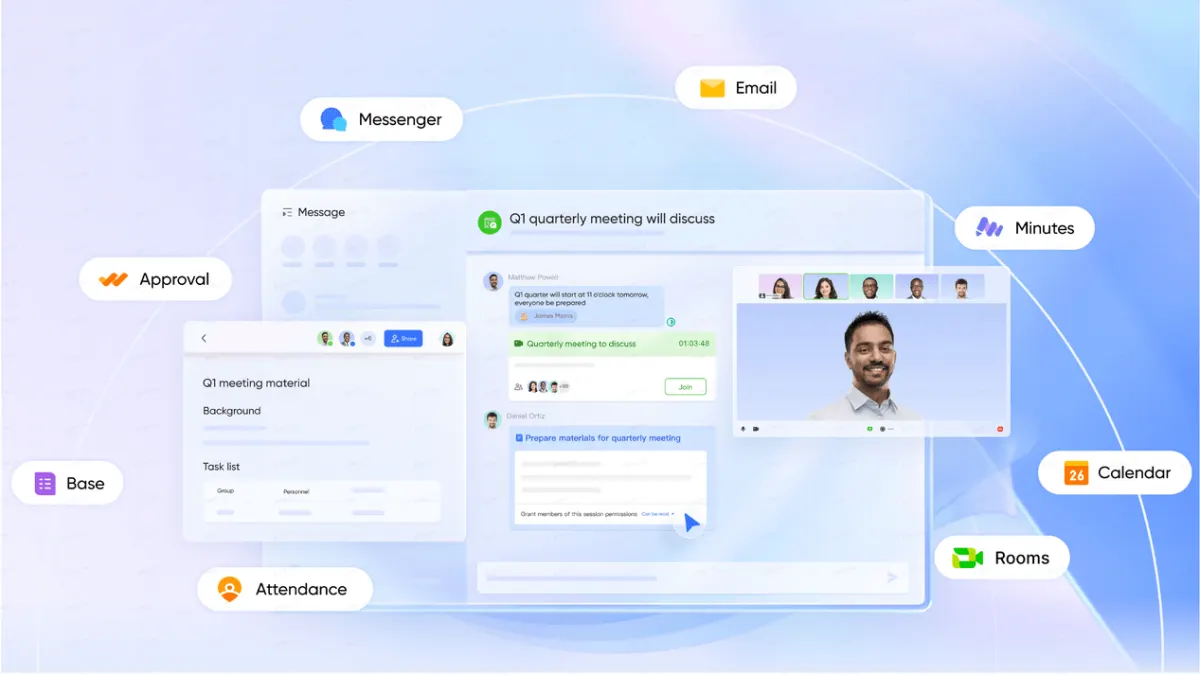
Feishu puts documents and collaboration at the center: a chat leads to a document, a document to a task, a task to a meeting, without leaving the app.
- Messenger: one-on-one and group chats, with messages that can be turned into tasks or calendar events.
- Docs: several people write in the same document at the same time, with embedded tasks, polls and comments.
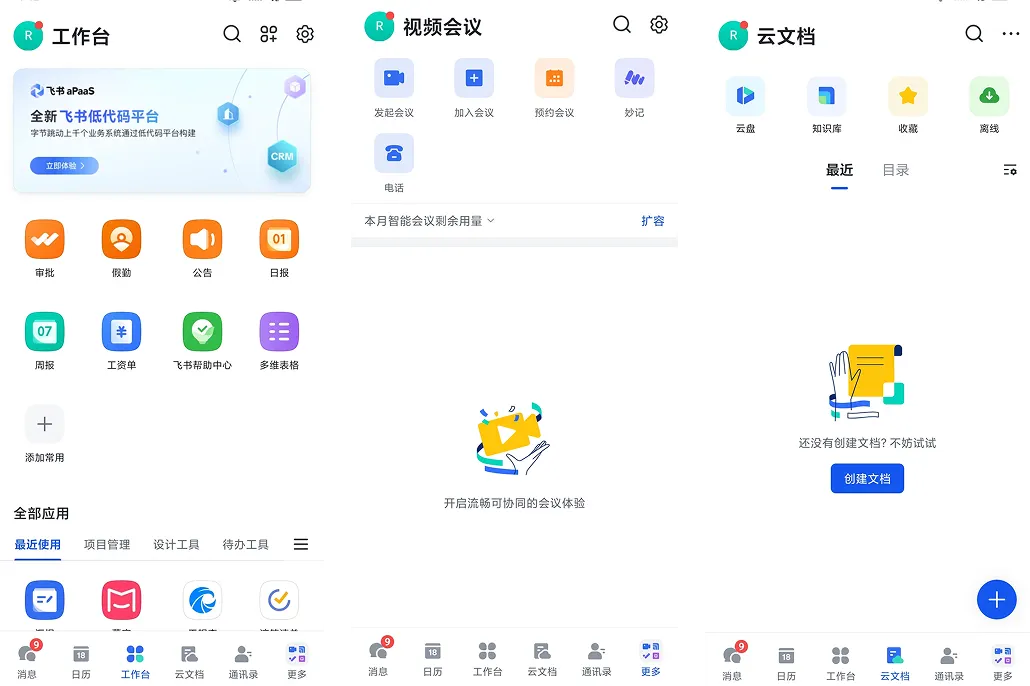
- Base (multidimensional tables): spreadsheets that work like a lightweight database, used to build simple business tools without code, such as a lead tracker or a content calendar.
- Meetings and Minutes: video meetings with AI-generated summaries and live subtitles that can be translated.
- Calendar, approvals, attendance and email complete the suite.
- Open platform: APIs and bots connect Feishu to other software and automate workflows.
Who uses Feishu
Feishu was first built for ByteDance’s own teams, and its users still look like them: internet and technology companies, agencies and studios in design, development and consulting, and fast-growing companies that work across departments and cities. Its domestic user base is smaller than DingTalk’s, but it has a strong following among companies that value shared documents and quick decisions.
What a foreign company can do with Feishu
A foreign team usually uses Lark, the international version, for its own staff, and joins Feishu when a Chinese partner works there. Feishu and Lark are separate services with their own accounts, so check with your partner which one to use before setting up a shared workspace.
The value for a foreign company often lies in connecting Feishu to the rest of its systems. With the open platform, data from Base tables, approvals or forms can feed a CRM or a reporting dashboard, and alerts from those systems can arrive in a Feishu chat. QPSoftware builds these CRM and business intelligence solutions for companies operating in China; if you are comparing tools, our article on choosing a CRM in China is a good starting point.
How Feishu differs from DingTalk, WeCom and Tencent Meeting
- DingTalk, from Alibaba, leans toward management: attendance, approvals and reports, for organizations that want close control. Feishu leans toward collaboration and giving individuals good tools.
- WeCom, from Tencent, stands out for its link with WeChat, which lets employees talk to customers. Feishu is mostly used inside the company.
- Tencent Meeting focuses on video conferencing. Feishu meetings are tied to documents, tasks and the calendar, so notes and follow-ups stay in the same place.
How QPSoftware can help
If your team or your Chinese partners work in Feishu, we can connect it to your CRM, ERP or reporting tools so that information does not stay locked in chats and tables. As a CRM and BI agency in China, our Shanghai team designs the integrations and dashboards around the way your team already works.
Frequently Asked Questions
What is the difference between Feishu and Lark?
Both are ByteDance’s workplace suite. Feishu is the version for mainland China, at feishu.cn, and Lark is the version offered outside mainland China, at larksuite.com. They share most features but are run as separate services, with separate accounts, so a team in China and a team abroad should agree on which one they will use.
Is Feishu available in English?
Feishu is designed for users in mainland China, and much of its help content and app ecosystem is in Chinese. For an English-speaking team outside China, Lark, the international version, is the usual choice, with English as a working language. Teams that work closely with Chinese partners on Feishu often keep a bilingual colleague to handle setup and administration.
How does Feishu differ from DingTalk?
Both cover chat, meetings, documents, approvals and attendance. DingTalk, from Alibaba, emphasizes management tools and is widely used by traditional companies, schools and public bodies. Feishu, from ByteDance, emphasizes shared documents, multidimensional tables and fast collaboration, and is popular with technology and creative companies. The choice usually depends on how much control or collaboration an organization wants.