
Douyin is ByteDance’s short-video and live-streaming app for mainland China, launched in 2016. For a foreign company it works as three channels in one: a feed where Chinese consumers discover brands, an advertising platform, and a shop where viewers buy without leaving the video. TikTok, from the same parent company, is a separate app for markets outside China.
What Douyin does
Douyin opens on a full-screen feed of vertical videos, chosen by a recommendation algorithm from what each user watches, likes and shares. Users create with built-in filters, effects, a music library and one-tap editing, and they interact through comments, duets, challenges and live streams.
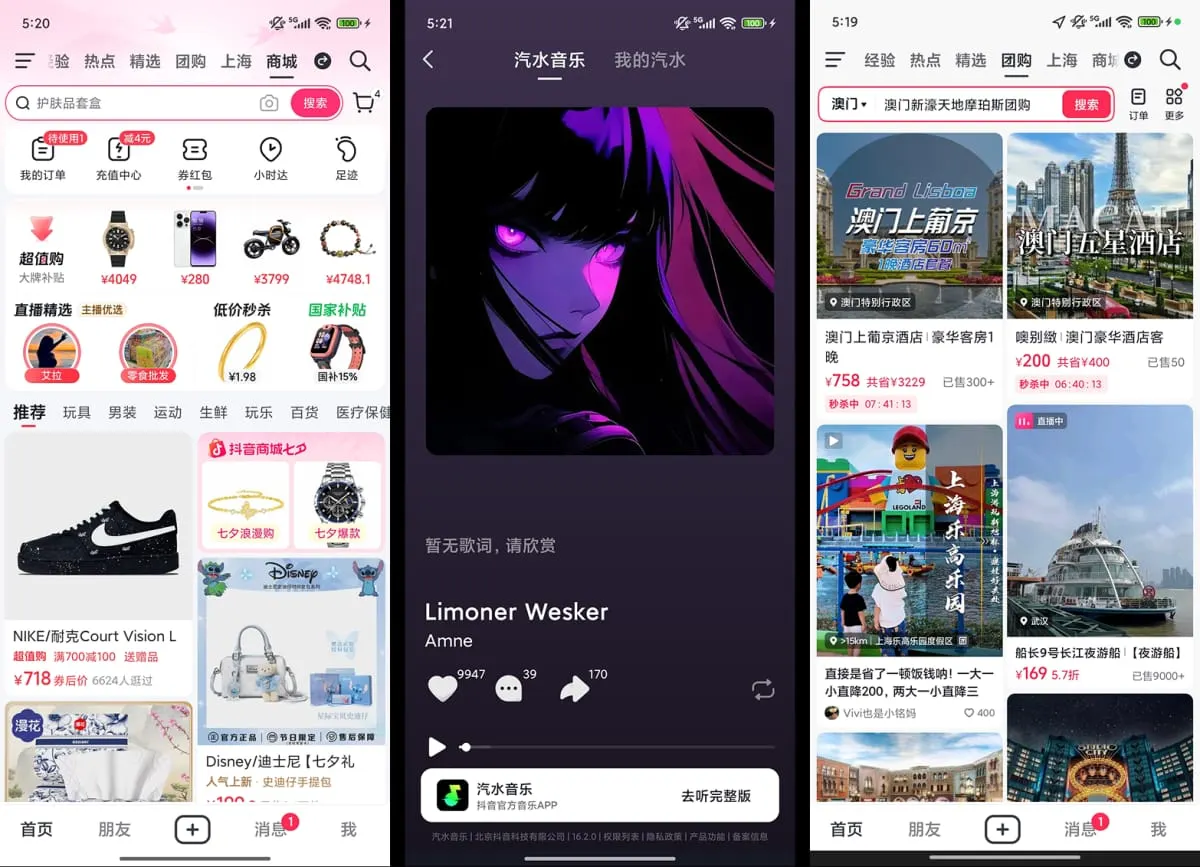
Around that feed, the app has added services that keep users, and their spending, inside Douyin:
- Live streaming: creators and brands host live shows and sell products in real time.
- Douyin e-commerce: product links in videos, a Mall tab, brand stores run through Douyin Shop (抖店), and sales during live streams.
- Local services: group-buying deals for restaurants, hotels, attractions and leisure, sorted by city.
- Mini programs: lightweight apps that run inside Douyin, compared with the WeChat, Alipay and Baidu platforms in our guide to mini program platforms in China.
Who uses Douyin
Short video is mainstream in China. The China Internet Network Information Center (CNNIC) counted 1.074 billion short-video users in December 2025, out of 1.125 billion internet users, in its 57th Statistical Report on China’s Internet Development. ByteDance is a private company and does not report Douyin’s audience in regular public results, so treat audience figures quoted without a source with caution.
Douyin reaches users of all ages and city tiers. Its content tends to be polished and trend-driven: music, challenges, tutorials, product reviews and short dramas.
What a foreign company can do on Douyin
- Run a brand account. An enterprise account publishes videos, hosts live streams and answers messages. Verification asks for business registration documents, such as a business license or proof of trademark ownership, so plan it before any launch date.
- Advertise. Douyin ads are bought through Ocean Engine (巨量引擎), ByteDance’s marketing platform: splash ads when the app opens, in-feed video ads, branded challenges, and paid promotion of posts and live streams.
- Work with creators. Xingtu (巨量星图) is ByteDance’s official marketplace where brands find Douyin creators and manage sponsored videos.
- Sell. Douyin e-commerce lets merchants sell in videos, in live streams and in their store. The entry conditions for brands without a Chinese company change over time: check them on the merchant platform, or work through your Chinese entity or a local partner.
Douyin creates demand, but the order, the payment and the customer data still need a store behind them. An e-commerce agency in China connects Douyin with your catalog, payments and other sales channels.
Douyin, TikTok and Kuaishou: what is the difference?
Douyin and TikTok share a parent company and a similar interface, but they are separate apps with separate accounts, content, rules and audiences. TikTok is not offered in mainland China, and a TikTok following does not carry over to Douyin: a brand starts from zero there, with Chinese-language content.
Kuaishou is Douyin’s closest Chinese neighbor: short video and live commerce too, but with a base built outside the largest cities and live sales that rely on the trust between streamers and their followers. WeChat Channels, inside WeChat, spreads videos through friends’ networks rather than through an algorithm alone. Our guide to video marketing in China compares these platforms for B2B and B2C brands.
How QPSoftware can help
QPSoftware is a digital agency in Shanghai, working with foreign brands since 2009. Douyin brings the traffic; we build what converts it, from the online store and the product catalog to payments and integrations with your other channels. Talk to our e-commerce team in Shanghai before you plan your Douyin launch.
Frequently Asked Questions
Can a foreign company open a Douyin business account?
Yes, under conditions. An enterprise account is verified with business registration documents, usually a Chinese business license, and sometimes proof of trademark ownership. Many foreign brands open it through their Chinese entity or with a local partner. Selling through Douyin e-commerce has its own merchant requirements, which change over time, so check them on the merchant platform before you plan a launch.
Is Douyin the same as TikTok?
No. Both belong to ByteDance and look alike, but they are separate apps. Douyin serves mainland China, with Chinese-language content, Chinese ads and its own e-commerce. TikTok serves markets outside China and is not offered there. Accounts, followers and ad campaigns do not move from one to the other, so a brand needs a dedicated Douyin presence.
How does Douyin differ from Kuaishou?
Both are Chinese short-video and live-commerce apps. Douyin is driven by its recommendation algorithm and trend-led, polished content, and it reaches users across all city tiers. Kuaishou built its audience in smaller cities and rural areas, with down-to-earth content and sales based on the bond between streamers and their followers. Many brands start on Douyin and add Kuaishou for wider reach.